Showing posts with label Writers Resources. Show all posts

Friday, April 12, 2013

THE STORY SO FAR: PART 223

OUR HEALTHCARE SYSTEM—AN AMERICAN HORRROR STORY IN COST TERMS

AND NOT SO GOOD WHEN IT COMES TO QUALITY

It is nothing new to say we have an extraordinarily expensive system which not only fails to cover something like 40 million Americans, but also has severe quality problems. At its best, it is the best—which is wonderful (if you can afford it). For most people it does not show up too well compared to other developed nations. When it comes to longevity, we do not fare well—and we tend to be sicker that the populations of other nations as we age. In short, not only do Americans have shorter lives, but the quality of those lives is not what it might be.

Why is this? Healthcare deficiencies are not the only cause—lifestyle choices, the poor quality of our food, and environmental pollution are factors—but healthcare is still a serious cause for concern.

We know all this—it is certainly publicized well enough—and yet we seem incapable of doing anything about it. As with so many other issues, the richest nation in the world—famous for its “can do” attitude—seems caught in the greed of vested interests.

Recently I ran across some graphics which ram home just how out of line we are. In cost terms alone, it is a horror story.

What is particularly striking is just how out of line U.S. costs are. The differences are so extreme—even compared to high cost European countries like Switzerland—that it is hard not to suppress the feeling that something is very wrong; that greed, both corporate and personal, has got completely out of hand.

By the way, these graphs come from a commendable site called Priceonomics.com There are many more graphs on the Priceeconomics site and they make chilling reading.

image


image


image


Coincidentally, an excellent article by Jeffrey Pfeffer appeared in the Business Week of May 10 2013. He places the blame on the administrative costs imposed by insurance companies. I doubt that he is entirely right--there are other culprits ranging from over-priced drugs to for-profit hospitals—but he is certainly partially right.

The following is an extract from his article.

More than 20 years ago, two Harvard professors published an article in the prestigious New England Journal of Medicine showing that health-care administration cost somewhere between 19 percent and 24 percent of total spending on health care and that this administrative burden helped explain why health care costs so much in the U.S. compared, for instance, with Canada or the United Kingdom. An update of that analysis more than a decade later, after the diffusion of managed care and the widespread adoption of computerization, found that administration constituted some 30 percent of U.S. health-care costs and that the share of the health-care labor force comprising administrative (as opposed to care delivery) workers had grown 50 percent to constitute more than one of every four health-sector employees.

Pfeffer is the Thomas D. Dee II Professor of Organizational Behavior at Stanford University's Graduate School of Business, where he has taught since 1979. He is the author or co-author of 13 books, including his latest, Power: Why Some People Have It—and Others Don't (HarperCollins, 2010).

Thursday, April 11, 2013

THE STORY SO FAR: PART 222

THIS CARTOON IS RATHER TOO CLOSE FOR COMFORT

I LOVE IT!

toon-1239

It is extremely satisfying to create a home—no matter how modest. Though my personal circumstances were decidedly spartan while at my expensive boarding schools—which enforced the notion that hardship and discipline build character—I was exposed to considerable luxury both while growing up, and afterwards when I was in business armed with a generous expense account. Nonetheless, I have gradually grown to want less and less in material terms. Also, I have stayed in too many expensive hotels, and eaten in far too many overpriced restaurants, to regard them as luxury.

This hasn’t stemmed from any conscious philosophy—or religious conversion—but more from the realization that the main focus of my life is writing, and that anything which distracts from that is almost certainly unnecessary. Having time to myself to write—now that really is luxury.

It is also salutary to have to go through the belongings of someone who has died—as I have done twice in the last few years. Somehow, as you mourn the person who has passed on, material possessions seem trivial.

This isn’t to say that I don’t appreciate nice things. It is much more a feeling that I don’t need them. I admire works of art and fine craftsmanship, but if someone else wants to own them—providing I have reasonable access to some of them, so I can keep my artistic sensibilities exercised—that’s fine by me.

I make an exception where my work is concerned. There I like to be as well equipped as I need, and can afford. I also like to be reasonably comfortable.

That phrase reminds me of the story of a British Army officer who even when sleeping in the field, in a trench, insisted on sleeping in silk pajamas. If necessary, he would wear his uniform over them, but he always insisted on changing into them before closing his eyes. When asked about this eccentricity, he commented: “Any fool can be uncomfortable.” He was killed in the endless battle of Monte Cassino—and was buried in his silk pajamas. True story? Supposedly yes—but if it is not, it should be.

My friend Tim has just tend me a particularly cheering quote.

"Saints are sinners who kept on going."

--Robert Louis Stevenson,
Scottish novelist, poet and essayist

How encouraging!

Tuesday, April 9, 2013

THE STORY SO FAR: PART 220

THE WORLD IS FLAT—OR WOULD BE IF I HAD MY WAY

The illustration is the logo of the Flat Earth Society—but, of course, you knew that.

File:FESlogo.gifNo, I haven’t suddenly lost it—as best I can determine. I’m merely writing about my obsession with flat surfaces; and how this eccentricity tends to give me a very particular outlook on life.

Yes, I did consider using the word ‘peculiar’ instead of ‘particular, but, fundamentally, I believe my concerns are rational (in the context of being a writer).

For instance, if I enter a room and there happens to be a Van Gogh on the wall—and I like the man’s work—I will give it scant attention until I have scoured the room for flat surfaces. Whereupon I will try and work out how to steal it. Mind you, I’m not preoccupied with just any kind of flat surface. Primarily, I tend to look for tables or desks which I can use to write on—and shelving for books, files, and papers. I do this even if I am adequately provided for at home. One never knows. Writing is scarcely a stable occupation.

It is an unusual obsession, I will grant you, but I submit it is entirely reasonable in the context of my profession. We writers need such things—and the world—shame on it—does not seem to appreciate that fact. Indeed, where such resources do exist, they are frequently wrong in some way. Tables are set at the kind of heights which will give you terminal back ache. Shelves are designed for china ornaments or not adjustable. If I was king I would make it a crime to own shelves which were not adjustable to varying book heights; and people who produced wobbly tables would be shot frequently and often.

I loathe, hate and detest wobbly tables, and am amazed how many of them there are. In fact, whenever I encounter a table or desk—say in Office Depot while buying paper—I normally check out the flat surfaces in the furniture department and tend to be thoroughly depressed at what I find. We live in a wobbly world. This fact may explain a great deal.

Do you know I wrote much of my first book, GAMES OF THE HANGMAN, with the aid of an oak coffin lid? It was agreeably solid, stable, and flat.

Death may have its downside, but it doesn’t appear to be wobbly.

Monday, April 8, 2013

THE STORY SO FAR: PART 219

WHICH COUNTRY DOES WHAT BEST—AND WHY DON’T WE LEARN FROM THEM?

Graphic

I’m a believer that the answers to most of the problems that this country faces are out there, but we don’t solve them—or even try to solve them—in most cases because:

  • The assumption is that the American Way is always best—even if the facts flatly contradict such a viewpoint.
  • Despite possessing many remarkably talented people—the track record of American innovation is extraordinary—as a nation, we are just not intellectually curious; and we certainly are not internationally oriented. The U.S. Government may want to police the world on behalf of American business, but most Americans are internally focused.
  • As a culture, we are notoriously poor with languages. This makes it much harder to study what other countries are up to in any detail.
  • Ideology dominates our political system to the exclusion of consideration of factual evidence. Here, statements like: “Private enterprise is always better than government” simply fly in the face of the evidence. It may, indeed, be better under some circumstances. Under others, it may be a great deal worse (look no further than reconstruction in Iraq and Afghanistan). Also, much as there is contrast between well run corporations and badly run corporations, there is a vast difference between effective government and inefficient government.

Following this theme through, and limiting this exercise to a small number of fundamental areas, I have been trying to work out which country—or group of countries—does what best. The categories I have chosen are relatively small in number, but they cover the majority of the essentials.

BEST HEALTHCARE SYSTEM

TAIWAN

This was set up with the help of American expertise and shows what could be done if we adopted a single payer system and designed it from scratch. In brief, it offers a very high level of service at half the cost of the current U.S. system.

BEST K12 EDUCATIONAL SYSTEM

FINLAND

The Finnish system is drastically different to the American—and yet year after year it delivers superior results. Yet, if anything, we are evolving in the opposite direction. The U.S. system is authoritarian and test oriented. The Finnish system is focused on encouraging the student to develop at his or her own pace, allows great flexibility and depends on outstanding teachers.

BEST COLLEGE & UNIVERSITY SYSTEM

U.S.A.

This a heavily qualified judgment because though U.S. universities, at their best, seem to be the best in the world, many universities and colleges seem to be little more than mediocre—and there are serious concerns about the private sector. Add in the student debt issue—now up to a trillion dollars—and the dropout rate—and there is serious cause for concern. Quite how is a good thing to launch each generation laden with debt?

BEST AT INNOVATION

ISRAEL

This crown used to go to the U.S. automatically but we have lost considerable ground over the last few decades. Various reasons have been put forward: Short-term thinking by U.S. corporations. The poor quality of much of our educational system. The loss of much of our manufacturing base together with the innovation that goes with manufacturing.

An additional point is that, since WW II, much innovation in the U.S. has had its roots in government initiatives. However, since government investment has been cut back since the Reagan administrations, the effects have rippled through the entire economy.

Generally speaking—subject to notable exceptions like Google—large corporations are risk averse. Faced between delivering poor quarterly results and cutting back on research, research invariably suffers.

BEST HOUSING POLICIES

Here, I don’t know the answer, but I would like to because housing is so fundamental to our quality of life. What I can say is that it is not the U.S. Additionally, it is virtually certain that the most cost effective system includes significant government involvement.

Singapore, for instance, whose economic performance has been astonishing, made a point of ensuring all its population was properly housed from the beginning.

MOST COST EFFECTIVE YET FORMIDABLE DEFENSE SYSTEM

ISRAEL

Compare the U.S. and Israeli defense budgets and weep. The Israelis get so much more for their money, we should be ashamed of ourselves.

The U.S. has evolved the most expensive way of making war in the world. This benefits the deeply corrupt Military Industrial Congressional Complex and provides well paid retirement jobs for generals and other senior officers, but it is highly questionable if it serves the national interest. Consider also that we have bases throughout the world (over 1,000) and troops in something like 150 countries. How exactly does such a bloated structure really serve the U.S.?

BEST TRANSPORT INFRASTRUCTURE

EU (NORTHERN EUROPE)

It is popular to denigrate Europe at present, but much of the EU (and associated countries) actually work extremely well. This region includes Germany, Austria, Switzerland, Holland, Norway, Sweden, Denmark and Finland. You can argue about France—which remains highly successful in some areas. I would normally include the UK, which is a highly developed economy, but its current austerity policies are proving to be questionable. Still, let’s include it.

The point here is that the total population of the above countries is roughly that of the U.S. Accordingly, the argument that something which works in Europe wouldn’t work in the U.S. because America is so much larger in population terms is specious.

BEST ENERGY POLICIES

EU (NORTHERN EUROPE)

Europe uses half the energy we do on a per capita basis and is highly advanced in developing renewable resources. In addition, massive investment in rail and public transport in general has paid energy dividends.

BEST LABOR RELATIONS

EU (NORTHERN EUROPE)

Europe made its peace with labor after World War II—ironically with American help. In contrast, the U.S. approach to labor relations is essentially adversarial to the point of active hostility. Worker rights are minimal, benefits such as defined pensions are being dropped, and there is an ongoing and successful campaign against unions. Such management hostility constitutes a significant weakness when it comes to economic development, and there is currently growing evidence that worker dissatisfaction and disillusionment is impacting the economy.

BEST SOCIAL SAFETY NET

EU (NORTHERN EUROPE)

This is a matter of different philosophies. The EU, regardless of political orientation, is committed to a Social Safety Net. Much of the U.S. is not.

BEST ENVIRONMENTAL POLICIES

EU (NORTHERN EUROPE)

Recent research shows that Americans get ill more as they age than other developed nations—and die sooner. Why is this? There is increasing evidence that environmental pollution of various kinds—including pollution of our food chain—may have a great deal to do with it.

In contrast, Europe has been environmentally concerned for decades and environmental regulations are enforced. The results speak for themselves.

BEST ECONOMIC SYSTEM

EU (NORTHERN EUROPE)

Given Europe’s current troubles, this judgment will be considered contentious. However, I am talking about Northern Europe, not Europe as a whole.

It is my belief that an economic system must yield balanced results for the benefit of all the population. The U.S. system is not yielding anything like balanced results. Healthy growth which neglects the welfare of much of the population is not a satisfactory result. Similarly, booming corporate profits coupled with low wages and high unemployment are unacceptable. Further negatives are rising poverty and hunger (which government now refers to as food insufficiency).

CONCLUSION

Some may regard this piece as negative because it is critical of the U.S. I see it rather differently because its orientation is towards identifying solutions. It would be nice to think we would try some of them. It is depressing to say so, but the likelihood is that we will not.

Experimentation would be a helpful approach. Could the Taiwanese healthcare system work in the U.S? Lets find out by trying it out in a single state.  Would massive investment in transport infrastructure pay off? Lets find out by trying it out in another state—or perhaps we should try regions (as in multiple states).

Above all, it would be a fine thing if we would be willing to place evidence ahead of ideology.

But that does not seem to be the American way.


Friday, April 5, 2013

THE STORY SO FAR: PART 216

STRESS—AND HOW TO DEAL WITH IT (I HAVE NO MAGIC ANSWERS)

IN PRAISE OF SLEEP

hemingway_how to.jpgAnyone who opts for a creative way of life—being a writer, actor, musician, painter or poet, for instance—is also opting for a life of stress. There is creative stress, which is major just by itself—Can I master my craft to the necessary standard; and then exceed it?—and then there is the stress which comes from the chronic lack of financial stability which goes with the territory—which ripples into all kinds of other problems, particularly where relationships are concerned. It is hard to be a good provider if you are an actor who is out of work most of the time.

Other stresses include the fact that it is almost impossible to explain the creative way of life to someone who has a normal job. Their solution, in almost ever case, is: Give up your crazy way of life. Get a job like a regular person. Which of course assumes that you can.

So how does a creative person cope with stress? Well, if you are a typical American you will opt for either legal or illegal drugs. The percentage of people on legal meds for some reason or other is truly frightening. Essentially, this is a chemically drugged culture.

Drinking is the traditional stress reliever where writers are concerned. This is what Hemingway (see above) commented:

"I have drunk since I was fifteen and few things have given me more pleasure. When you work hard all day with your head and know you must work again the next day what else can change your ideas and make them run on a different plane like whisky? When you are cold and wet what else can warm you? Before an attack who can say anything that gives you the momentary well-being that rum does?... The only time it isn't good for you is when you write or when you fight. You have to do that cold. But it always helps my shooting. Modern life, too, is often a mechanical oppression and liquor is the only mechanical relief." —Ernest Hemingway, Postscript to letter to critic, poet and translator Ivan Kashkin, 1935

Personally, I rather like Mark Twain on the subject of alcohol:

"I always take Scotch whiskey at night as a preventive of toothache. I have never had the toothache; and what is more, I never intend to have it." —Mark Twain

I’m with Mark Twain except that I prefer wine. But, alcohol apart, I find there is a great deal to be said for:

  • Writing-which is both demanding yet relaxing,
  • Relaxing with a really good book
  • Exercise – extraordinarily important
  • Vacations – the U.S. seems to be constitutionally set against vacations, and almost entirely ignorant of the benefits that result from a long vacation. Europe has a great deal to teach us here.
  • Not over-working
  • Eating intelligently
  • Sleeping

Recently, I have gone through a period of intense stress and became seriously sleep deprived. Now the move is over—albeit not the getting organized phase, I am beginning to catch up on sleep.

I have a way to go yet, but it feels wonderful.


Thursday, April 4, 2013

THE STORY SO FAR: PART 215

MAGNIFICENT MOVIES & BURIED MEMORIES

File:Kings speech ver3.jpg

I saw THE KING’S SPEECH last night, and was much moved.

Fundamentally, this is a movie about decency—a theme that I seem to be somewhat pre-occupied with these days.

On the one hand, there is much about the U.S. that is cruel, capricious and corrupt—yet again and again I am encountering great decency. Sadly, the decent do not seem to be running the country.

I have the feeling that there is a story in there trying to get out but, so far, it is eluding me. That is often the case. At least where I am concerned, the gestation period for a book can be years. That doesn’t really worry me since one of the great pleasures of writing is letting a story, or even just a concept, evolve. That doesn’t mean you merely sit on the sidelines and watch—so to speak—but I find, if I keep my mind well fed, that my subconscious does much of the work.

The movie reminded me that I used to stutter badly as a child—something I had forgotten completely even though it was a problem for years. The cause, so the movie would have you believe, is severe emotional distress—and I certainly experienced plenty of that both at home and at my first boarding school in Ireland (where, at five, I was too young, and where bullying was endemic). I can but speculate, but I think the solution was a period of stability which followed my mother remarrying, and my being sent to boarding school in England (where bullying was minimal).

I watched parts of THE KING’S SPEECH in a state of some distress. Some of the experiences described were far too close to home. Still, decency triumphed—which is the way one would like life to be.


Wednesday, April 3, 2013

THE STORY SO FAR: PART 214

HOW LONG DOES IT TAKE TO ADJUST TO A MOVE?

Fundamentally, I’m a homebody who likes to potter around a familiar space. What is more, being a writer, I normally work from home. That combination means that I find moving particularly disruptive.

Traumatic? That has certainly been the case in the past on a few occasions—but I wouldn’t go that far on this occasion. Firstly, I wanted to move, secondly some wonderful people helped me, and thirdly I am very happy in my new location.

That said, although my desk is in place, and I have internet access, most of my files are still in boxes so I don’t have a work flow going. How long will it take to get organized? Another week to ten days is my best guess—with other work going on concurrently—but I don’t really know. What I can say is that I’ll feel a lot better when I know where things are. Currently, I’m still hunting through boxes—albeit those boxes are labeled, which helps greatly. What is more, I have used file boxes with removable lids instead of traditional moving boxes. Highly recommended because they are easy to handle, stack well, and one can whip off the lid to check the contents.

This move has been made vastly more pleasant by the fact I have been both helped by, and have subsequently met, some rather wonderful people. It makes me wonder why this great country is in the state it is in when there is such decency at grass roots level.

Speaking of wonderful people, my amazing sister, Lucy, has dug up another photo of my much loved step-father, Alfred Lyons. He really was a singularly fine-looking man—and I owe him more than I can say.

He also had a wicked sense of humor and would have thoroughly enjoyed my epic feat of locking myself out on April 1. I can practically hear him laugh.

I miss the man. 


Sunday, March 31, 2013

THE STORY SO FAR: PART 211

A NEW HOME, SETTLING-IN—AND EASTER SUNDAY

Thanks to a completely marvelous family, the Sammons, the move was conducted with impressive speed and efficiency. Two cars and a truck arrived—and I was loaded and out of there. These guys (and one is very much a gal) are singularly impressive on a host of fronts.

I’d got up at 4.00 am to try and make sure I was on top of things, but ended up practically catatonic with fatigue. I sat in my chair in the middle of the chaos that is moving—felt hugely happy—and then fell asleep. Later, I wrapped myself in my duvet and fell asleep on the carpet. There was stuff I could have used to soften the experience, but I was too tired.

I don’t yet have a bed. I awoke somewhat stiff and store, feeling a little old for this kind of caper. Nonetheless, I am completely thrilled. I am delighted with my new home.

The Sammons invited me to dinner that evening—Easter Sunday. It was one of most enjoyable few hours I have ever experienced.

I will write more about this some other time. Right now I’m just more thrilled than I know how to express.


Wednesday, March 27, 2013

THE STORY SO FAR: PART 207

DEFINITELY A ROCK-STAR—AS FAR AS HER FAMILY IS CONCERNED

I have talked about my much loved sister Lucy on various occasions, but haven’t yet shown a photo of her. Well, it is time I remedied that deficiency. I have chosen this photo because it brings out Lucy’s sense of fun. Let me stress that she is dressed up for an event; she does not normally present herself in this way.

The photo was posted by her daughter, Victoria—who is drop-dead gorgeous. I have to wonder about the genes in my family. Lucy and family seem to have been disproportionately blessed,

But there is more: Not only is Lucy the youngest member of the family—no less than 12 siblings are involved and I am the eldest—but she also has five truly gorgeous children of her own (and most are grown up). How does she do this—and still look so ridiculously young?

It’s unfair, I tell you!

I have absolutely no clear idea—though her positive attitude may give some clue—but am lost in admiration. Leaving her physical attributes aside (Lucy won’t thank me for saying this) the essence of Lucy is an extraordinary cast of mind.


Orso Clip Art

Tuesday, March 26, 2013

THE STORY SO FAR: PART 206

TO WRITE IS TO LEARN—WHICH IS ONE OF ITS PLEASURES

MIND YOU, I NEVER THOUGHT I WOULD SAY THAT ABOUT PUNCTUATION

I learned most of my punctuation nearly 60 years ago—a sobering thought—and didn’t enjoy the process. Still, I must have been taught fairly well because my essays ceased being returned looking as if they had been savaged by a maniac with a red pencil, though my spelling still left a lot to be desired. Frankly, it still does; but, fortunately the gods invented spell-checkers so my inadequacies in that area are largely hidden.

Recently—somewhat to my amazement—I have become interested in punctuation, and actually enjoy it because Jane Strauss teaches it in such a cool way. Yes, that is her below—and I cannot recommend her too highly. Somehow she makes sense out of her arcane area, and she writes with a light touch.

Still, I had never heard of the term ‘Oxford Comma’ until her mailing arrived today. I am now enlightened.

Are grammar and punctuation important for a writer to master? Many young writers seem to think their raw writing talent will compensate for any deficiencies in that area.

The masters—like James Joyce—can break the rules and get away with it; but as far as the rest of us are concerned, let me give you a simple answer: Yes.


Orso Clip Art

Sunday, March 24, 2013

THE STORY SO FAR: PART 204

MY STEP-FATHER, ALFRED LYONS—A TRULY MARVELOUS MAN WHO HAD A PROFOUND AND POSITIVE INFLUENCE ON MY LIFE

I have written about Alfred before but, for some reason, couldn’t lay my hands on this photo—my favorite one of him. To be precise, I had it on the computer, but it refused to cut and paste—computers can be obstinate sometimes. Then my sister, Lucy, came up with a version—and here it is.

I was about eight when I heard my mother was getting married again. I took to Alfred immediately and, as the eldest child, made the decision to call him “Daddy” rather than by his name. This was something that I hoped he would appreciate—and I was to learn, over many years, that he did. We became very close.

I had never known my own father so rather the liked idea of having one—someone I could talk to, learn from, and love. In fact, Alfred never quite became a father. Somehow, he stepped back from the role--even where his own children were concerned. My mother was too strong-willed and dominant—and she controlled the money—so Alfred, who was ten years her junior, became more like an extraordinarily talented big brother. He was witty, intelligent, widely read, hugely entertaining—and could seemingly do just about anything. He was an accomplished artist, he had an eye for antiques, he drove superbly, he knew a great deal about the theatre, he was a delightful dinner companion—and so it went for a very long list. He was a deeply cultured man. Did his talent extend to business? Though he certainly understood business, and was tasked with looking after the family money for quite some time,  I suspect not. Fundamentally, Alfred had an artistic temperament.

Women adored him—which did not please my mother. My girlfriends also adored him which did not exactly please me. However, he was such fun that it was hard to take offense—even when he flirted outrageously.

For more than a decade he was a positive influence at home—and then the relationship broke him, as I feared it must.

He died far too young under decidedly unhappy circumstances—and I was absolutely devastated. I found it near impossible to imagine that all that humor, talent and energy was just gone. I was living in my thatched Irish cottage at the time, and recall going into into shock.

I adored and admired the man, and feel fortunate to have known him—albeit for such a relatively short time. I don’t think I have ever met anyone else who encompassed all his talents. Was he flawed? Of course—he was human—and his wit could sometimes be cruel; but the good far outweighed the bad.

One should be able to take death in one’s stride. It is both natural and certain. Nonetheless, I have never been able to become entirely reconciled to the deaths of either my grandmother or Alfred—and the sight of his photo makes my heart ache. Such a loss; such a waste; such a tragedy.

Then I remember the good times—and there were so many—and have to smile. Above all, I associate Alfred with laughter.


Friday, March 22, 2013

THE STORY SO FAR: PART 202

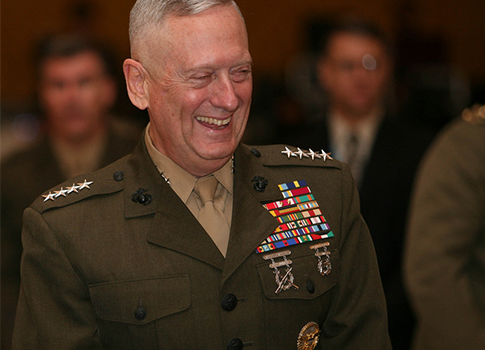
THE EXTRAORDINARY GENERAL MATTIS—A MARINE WITH A WAY WITH WORDS

James Mattis

One of my Army friends sent me an e-mail today containing quotes from General Mattis.

Now I mostly know Army generals—who are typically fairly judicious in their choice of language. They know that a poor choice of words can kill a career faster and more certainly than incompetence in command—even in time of war. As Tom Ricks pointed out in his excellent book, THE GENERALS, generals who don’t perform used to be relieved at a fairly rapid rate—especially during WW II—whereas since then the club of generals looks after its own; and the club does not approve of colleagues who are too outrageous, or grab the headlines. Would General Mattis have achieved four star rank if he been in the Army? Probably not—but he is a Marine.

This isn’t to say that the Army doesn’t produce some truly outstanding general officers—fortunately it does—and some are refreshingly candid (here General Jack Keane comes to mind) but I can’t think of any who come close to matching Mattis’s sheer verbal dynamism and ingenuity. What is more General Mattis fights like he talks.

The following is an extract from today’s e-mail.

Gen. James Mattis, known to his troops as “Mad Dog Mattis,” is retiring after 41 years of military service. The Marine Corps Times is calling Mattis the “most revered Marine in a generation.

Mattis has been commander of the United States Central Command since 2010 and led the 1st Marine Division into Iraq in 2003. According to reports, President Barack Obama decided to force the Marine Corps legend out early because he rubbed civilian officials the wrong way, and forced them to answer tough questions regarding Iran.

Mattis was an inspirational leader of men and his powerful words will go down in history.

Here are some of the best words that the “Mad Dog” has had to offer:

1. “I don’t lose any sleep at night over the potential for failure. I cannot even spell the word.”

(San Diego Union Tribune)

2. “The first time you blow someone away is not an insignificant event. That said, there are some assholes in the world that just need to be shot.”

(Business Insider)

3. “I come in peace. I didn’t bring artillery. But I’m pleading with you, with tears in my eyes: If you fuck with me, I’ll kill you all.”

(San Diego Union Tribune)

4. “Find the enemy that wants to end this experiment (in American democracy) and kill every one of them until they’re so sick of the killing that they leave us and our freedoms intact.”

(San Diego Union Tribune)

5. “Marines don’t know how to spell the word defeat.”

(Business Insider)

6. “Be polite, be professional, but have a plan to kill everybody you meet.”

(San Diego Union Tribune)

7. “The most important six inches on the battlefield is between your ears.”

(San Diego Union Tribune)

8. “You are part of the world’s most feared and trusted force. Engage your brain before you engage your weapon.”

(Mattis’ Letter To 1st Marine Division)

9. “There are hunters and there are victims. By your discipline, cunning, obedience and alertness, you will decide if you are a hunter or a victim.”

(Business Insider)

10. “No war is over until the enemy says it’s over. We may think it over, we may declare it over, but in fact, the enemy gets a vote.”

(Defense News)

11. “There is nothing better than getting shot at and missed. It’s really great.”

(San Diego Union Tribune)

12. “You cannot allow any of your people to avoid the brutal facts. If they start living in a dream world, it’s going to be bad.”

(San Diego Union Tribune)

13. “You go into Afghanistan, you got guys who slap women around for five years because they didn’t wear a veil. You know, guys like that ain’t got no manhood left anyway. So it’s a hell of a lot of fun to shoot them. Actually it’s quite fun to fight them, you know. It’s a hell of a hoot. It’s fun to shoot some people. I’ll be right up there with you. I like brawling.”

(CNN)

14. “I’m going to plead with you, do not cross us. Because if you do, the survivors will write about what we do here for 10,000 years.”

(San Diego Union Tribune)

15. “Demonstrate to the world there is ‘No Better Friend, No Worse Enemy’ than a U.S. Marine.”

(Mattis’ Letter To 1st Marine Division)

16. “Fight with a happy heart and strong spirit”

(Mattis’ Letter To 1st Marine Division)

Flickr

Wednesday, March 20, 2013

THE STORY SO FAR: PART 200

CYPRUS—THE ONLY PLACE WHERE, SO FAR, I HAVE SAT ON A SNAKE

IT DID NOT APPEAR TO ENJOY THE ENCOUNTER—AND, FRANKLY, NEITHER DID I

File:Cy-map.pngCyprus—a beautiful island with an extraordinary history, by the way—rarely hits the news, so it is strange indeed to see it as the focus of a financial scandal which may well threaten the stability of the European Union. Apart from anything else, the Greek Cypriot population is not much larger than 1.1 million—scarcely significant in an EU population of about 500 million. But the Greek Cypriots have long had a reputation as hustlers, and they certainly seem to have lived up to it when it comes to banking.

Before getting into the details of my very brief personal story, let me quote Wikipedia on the island in general.

Cyprus is the third largest island in the Mediterranean Sea, after the Italian islands of Sicily and Sardinia (both in terms of area and population). It is also the world's 81st largest by area and world's 49th largest by population. It measures 240 kilometres (149 mi) long from end to end and 100 kilometres (62 mi) wide at its widest point, with Turkey 75 kilometres (47 mi) to the north. It lies between latitudes 34° and 36° N, and longitudes 32° and 35° E.

Other neighbouring territories include Syria and Lebanon to the east (105 kilometres (65 mi) and 108 kilometres (67 mi), respectively), Israel 200 kilometres (124 mi) to the southeast, Egypt 380 kilometres (236 mi) to the south, and Greece to the northwest: 280 kilometres (174 mi) to the small Dodecanesian island of Kastelorizo (Megisti), 400 kilometres (249 mi) toRhodes, and 800 kilometres (497 mi) to the Greek mainland.

I went to Cyprus because it was degenerating into a civil war—and I wanted to get a sense of such a dangerous environment without actually getting shot. For some strange reason, I felt that if I was going to write thrillers, I should experience danger at first hand. If that sounds pretty damn foolish, you will get no disagreement from me. I am now older and wiser and have learned that violence is both unpredictable and unpleasant.

At the time—1974—the Greek Cypriots were gunning for the Turkish Cypriots and there was a definite sense that the island was about to explode. My main recollection is of Greek irregular forces, bristling with weapons, rushing around in long wheelbase Landrovers, and of Turkish villagers not quite knowing what to do. The Turks, who comprise less than a fifth of the population, were totally outgunned. What was absolutely clear is that something bad was going to happen.

In fact, after numerous incidents—normally resulting from Greek Cypriot aggression against the Turks—it did. Turkey invaded to save the local Turkish population—in what was something of a textbook military operation spearheaded by paratroops—and Cyprus remains divided to this day, though no country recognizes Turkish Cyprus except Turkey—which is rather sad. 

My sympathies, at the time, were with the Turks—probably because they were the underdogs—and I spent some time with a Turkish Army battalion stationed in Famagusta under some arcane U.N. agreement. Though they were hopelessly outnumbered by the Greek Cypriots—and knew they were going to be attacked—they were remarkably sanguine about the situation, and impressed me greatly. That said, I liked the Greek Cypriots—apart from the armed thugs—too.

All in all, it was a complicated situation with U.N. troops—who were trying to keep the peace—caught in the middle. In fact, one of my favorite memories is of an Irish U.N. soldier, leaning back on a spindly kitchen chair—at some risk to his welfare if the chair had collapsed—reading a book as if oblivious to the fact that he was stationed between decidedly edgy armed Greeks and Turks who were, quite clearly, spoiling for a fight.

This was insouciance elevated to high art. Later I was to learn that the Irish troops were highly regarded as peace-keepers. They could, and would, talk their way out of any confrontation.

The snake incident happened because I was rather fond of cross-country walking in those days, and, and after seeing a comfortable looking rock out of the corner of my eye, just didn’t look whether it was occupied or not. Careless of me. Of course it was—by a snake dozing away in the sun.

Hard to know which of us was more scared by the encounter. Fortunately, we both headed in opposite directions. I am left with two vivid memories: The feel of the snake’s surprisingly robust body as I sat on it; and the sight of its considerable length as it skedaddled away.

The British still have two sovereign bases on Cyprus. I only visited one—and was stopped at the perimeter—but vividly recall the largest array of aerials and other radio interception equipment I have ever seen. The display seemed to be endless. The reason is simple. Cyprus is conveniently located near most of the hot spots of the Middle East, so the British vacuum up anything and everything from the airwaves that they can.


Orso Clip Art


Monday, March 18, 2013

THE STORY SO FAR: PART 198

THE BOOK BUSINESS IS BEING TURNED UPSIDE DOWN AT A TRULY ASTONISHING SPEED

IN NOVEMBER 2012, 28 PERCENT OF ALL BOOK PURCHASES IN THE U.S. WERE IN E-BOOK FORMAT—A DRAMATIC RISE FROM SIX PERCENT IN NOVEMBER 2010

2012 Ebook share of market and retailer market share shifts, US and UK When I was first published back in 1991—which doesn’t seem that long ago, as far as I am concerned, but is pre-history to many people—the book chains ruled the earth, and Barnes & Noble dominated the book chains.

Just over two decades later, the second largest book chain, Borders, is gone, and Barnes and Noble is looking sickly. What is more is that e-books—scarcely heard about until Amazon introduced the Kindle in 2007—have seized a truly significant market share.

Let me quote from mediabistro which is, in turn, quoting from Bowkers:

According to a new report from Bowker Market Research, U.S. chain bookstores lost 13 percent of their share of book purchases in 2012.

Overall, chain booksellers saw their share decrease from 32 percent to 19 percent of volume. At the same time, Bowker recorded some dramatic gains in U.S. eReatailers and digital book growth. Check it out:

In the U.S., e-retailers accounted for 44 percent of book purchases by volume in 2012, up from 25 percent in 2010. In the U.K. the rise has been somewhat less dramatic but still significant, up from 25 percent in January-November 2010, to 38 percent in the same period in 2012 … In November 2012, 28 percent of all book purchases in the U.S. were in e-book format — a dramatic rise from six percent in November 2010.


Orso Clip Art

Thursday, March 14, 2013

THE STORY SO FAR. PART 194

HAVE YOU EVER THOUGHT OF DROPPING OUT AND GOING TO LIVE IN THE SOUTH OF FRANCE?

THE MEMORABLE ‘THE OLIVE GARDEN’ BY ACTRESS CAROL DRINKWATER TELLS JUST SUCH A STORY IN A HIGHLY PERSONAL, EVOCATIVE, AND SENSUAL WAY

http://www.caroldrinkwater.com

I don’t know how I missed THE OLIVE GARDEN when it was first published in 2001—I tend to be fairly alert to key words or phrases like “South of France” but somehow I missed the book completely. Fortunately Jo, who I had the honor of helping to nurse as she was dying of cancer, had the book in her collection—and though most of her books were donated to worthy institutions before I moved into this apartment, somehow THE OLIVE GARDEN remained.

Let me confess that I picked it up reluctantly. I was looking for a thriller to relax with. Nonetheless, I was soon gripped by Carol Drinkwater’s vivid tale—and finished it with great regret. I know the area she was writing about and have great affection for it.

The story is not complicated. She and her lover, Michel, find a house set on ten acres not far from Cannes—which they can’t really afford—buy it (a saga in itself) and gradually restore the property despite numerous setbacks.

The author, Carol Drinkwater, is arguably best known for her role in ALL CREATURES, GREAT AND SMALL—a TV series which was widely popular, but which I do not recall having seen. What I can say, is that whatever about her talent as an actress (and I gather she is highly regarded) she writes beautifully—with energy, empathy and a senusality that is entirely appropriate to her subject.

This is a must read book.


Orso Clip Art

Wednesday, March 13, 2013

THE STORY SO FAR: PART 193

THEMOTH.ORG—TALES OF THE MOTH—REPRESENTS THE HUMAN CONDITION, AND THE POWER OF RADIO, AT THEIR FINEST.

IF YOU ARE NOT MOVED BY SUCH TRUE STORIES, YOU ARE MADE OF STONE

I commented some time ago that, as I have been getting older—within the limits of being a member of a different sex—I have been turning into my much loved grandmother in terms of beliefs and lifestyle. Would it were so, in many ways, because she was an admirable human being with a big heart, but I fear my flaws exceed hers.

Nonetheless, there are similarities to our lifestyles—quite a few, in fact—apart from the fact that we both lived, or live, alone. One of them is that we both share (or shared) a passion for the radio. It’s informative, companionable, thoroughly entertaining, and remarkably inexpensive. Here I am referring to NPR in its various forms—not corporate radio (which has pretty much trashed a great medium).

One of the most impressive programs is TALES OF THE MOTH. These consist of nothing more that a single person telling a true story from their own experiences to a small audience—which is then recorded and transmitted. Many are extremely funny. Some are desperately sad. All are moving.

Stories are innate to the human condition. They give us identity, make us laugh—and give us hope. TALES OF THE MOTH represents the zenith of storytelling.

They make me proud to be a teller of stories, part of a fraternity that may just be—though the competition is formidable—the oldest profession.


Orso Clip Art


Sunday, March 10, 2013

THE STORY SO FAR: PART 190

TRYING TO EXPLAIN THE LURE OF A WRITING CAREER—WITH ALL IT’S INSECURITIES—TO PEOPLE WHO MOSTLY HAVE REGULAR JOBS—IS AKIN TO TRYING TO DEFY GRAVITY

LIVE WITH IT

THE PLEASURE OF WRITING IS MORE THAN ADEQUATE COMPENSATION

Photo

Saturday, March 9, 2013

THE STORY SO FAR: PART 189

THIS REMARKABLY STYLISH AIRCRAFT IS ACTUALLY A TILT ROTOR—AND IT IS ELECTRIC

If you examine this picture carefully, you will notice two shrouded rotors positioned horizontally to the rear of the extremely elegant wings. This is not a conventional fixed-wing airplane. The rotors allow it to take off and land vertically—just like a helicopter—but then rotate 90 degrees to provide forward thrust. At that point, the wings, and not the rotors, provide most of the lift.

But can Project Zero—yes, it really is called that—hover? It can do that too.

This aircraft has been designed with unusual style and flair. Yes, it is only a technology demonstrator, but most great aircraft technology breakthroughs originate in just such a manner. Beyond that, the reports are that Project Zero works—which is why it is finally being shown. Previously, for over a year and a half, it has been kept secret. This is scarcely surprising. It demonstrates some remarkably original thinking—yet, reportedly, it was designed and built in a little more than six months.

I have long believed in the concept of an electric aircraft—starting with a hybrid electric version. There are good reasons for this:

  • Conventional fuel is a major cost component.
  • The use of conventional fuel is decidedly detrimental to the environment.
  • Hybrid electric power is becoming well proven in automobiles.
  • Hybrid electric power is significantly less expensive.
  • Hybrid electric power is vastly quieter.
  • Electric motors are constantly being improved and are innately simpler and less bulky than the alternatives.

In the case of Project Zero, the aircraft’s control systems, flight controls and landing gear actuators are all electrically powered—which means no hydraulics are needed—and the aircraft does not require a transmission. This all adds up to a significant decrease in mechanical complexity and cost—and an increase in reliability. It also saves a great deal of weight, which has all kinds of positive implications.

Currently, the aircraft is battery powered—which, given the limitations of existing battery technology—allows for only limited flight duration. But a hybrid electric version is being considered using diesel to power a generator.

Conventional helicopters are wonderful things, and extremely useful, but they are also slow, noisy, expensive to buy and maintain—and spend their time trying to vibrate themselves to pieces (vibration is in a major problem). Could it be that Augusta Westland—a particularly interesting company—have come up with a viable new approach to rotary flight?

It would seem to be a decided possibility.

Augusta Westland’s management have stated publicly that they believe the future of rotary flight lies with tilt rotor aircraft. Given the cost and complexity of the V-22 Osprey—which is currently in service with various branches of the military—I would have doubted that, but Project Zero is such an original conception, they may well be right.

The company already has considerable experience of tilt rotor aircraft. It has recently developed the AW609 (see below) which is, in effect, a civilian derivation of the V-22 Osprey. Project Zero, with its emphasis on simplicity, would suggest they have learned a great deal from this exercise.


Orso Clip Art


Friday, March 8, 2013

THE STORY SO FAR: PART 188

WHAT IS CURIOSITY—AND WHY IS IT SO IMPORTANT FOR A WRITER—OR IS IT?

My much loved sister, Lucy, has a habit of coming up with provocative illustrations which she features on Facebook—so, once again, I am using her as a source of inspiration.

When Lucy was a baby, she was described by my mother as: Lucy the boosy—milky and juicy.

My mother was a difficult woman, but she had her tender moments. She loved Lucy—we all did—and we still do. Lucy is the matriarch of the family—yet the youngest. Yes, I know that is not logical. Humans are not logical. It is a matter of respect. It is an honor which has been earned.

The first question I asked myself was: Can you be a writer if you are not curious? Well, clearly you can in a mechanical sense—in that you can string words together—but the word writer to me implies much more.

It suggests an observer of life whose work helps to illuminate and advance the human condition. Yes, that does sound like a lofty goal, but I am not being that arrogant. One can achieve such desirable objectives in small ways—by entertaining, by contributing a little perspective, by stimulating the reader’s mind, by simply distracting him or her. Frankly, if I can do all that, I am vastly pleased. Do I have higher objectives? Of course—but I will settle for the practical.

But can you do that if you aren’t curious—if you are not remotely concerned about the behavior of your fellow human beings?

In effect, you are the ultimate disinterested observer. Perhaps, you observe; and perhaps you take notes—but since you are not remotely curious about motivation, or indeed any detail, your involvement is less dispassionate than inhuman.

Roll on flawed human beings. Curiosity may well be your primary redeeming feature.

My conclusion: curiosity is endemic to the role of a writer. Nothing matters more than a simple word: Why?


Orso Clip Art

Tuesday, March 5, 2013

THE STORY SO FAR: PART 185

HOW IS IT THAT THE GERMANS DO WHAT THEY DO—SO WELL—AND SO CONSISTENTLY?

The Germans hide their expertise in plain sight, yet for some reason we seem incapable of learning from it.

Decades pass, the evidence piles up, and still we seem incapable of learning from what—based on the evidence—is self evident. Their economic system works better than ours. If you don’t accept that argument, let me compromise: Aspects of their economic system deliver measurably superior results.

When I worked in the UK, I couldn’t understand why the British were so reluctant to copy the German economic system, and now it seems that the U.S. has similar reservations.

It is quite baffling because the German business model—which is not that complicated—is quite remarkably successful—and has been so since the end of WW II (and it did rather well before that). In addition, the Germans absorbed East Germany which was, for many years, a huge economic burden in its own right.

Dan Rather has written an excellent piece which appears in the Huffington Post of March 4 2013. The following is an extract from it.

We had just returned from our own tour of Germany's schools and factories and can report that the German model does in fact provide a viable and popular pathway to get young people employed immediately after high school in good paying jobs. Jobs that can turn into careers.

We found a culture where "vocational training" is not a taboo word, where companies invest billions of dollars annually in training young people who have completed tenth grade for apprenticeships in healthcare, information technology, and above all, manufacturing.

The results are hard to dispute: Germany's high school drop-out rate is around 7 percent (compared to the U.S.' dismal 23 percent.) And while 8 percent of Germany's youth population (ages 16-24) is unemployed, our youth unemployment is at 16 percent (for African-American youth, it's a bleaker 38 percent, according to the Department of Labor.)

Germany's highly-skilled workforce helps it create high-end products that the world is hungry for. As a result, Germany exports more products than anywhere else except China, and the country has been a lone beacon of good news while the rest of Europe has been laid low by the financial crisis.

Well, it is not true the rest of Europe has been “laid low” but the countries which are doing well—or well enough—are all really following variations of the German economic model, and are mainly clustered in Northern Europe. Of course, it can be argued that what works in relatively small countries like Sweden cannot work in the U.S., but if you add up the populations and GDPs of Germany, Austria, Switzerland and Scandinavia—all high wage, high added-value economies--the total adds up to a significant percentage of the size of the U.S. economy—and is doing vastly better in terms of the wellbeing of the average citizen.

It would seem no more than good sense to take a closer look.


Orso Clip Art