Showing posts with label Afghanistan. Show all posts

Friday, March 22, 2013

THE STORY SO FAR: PART 202

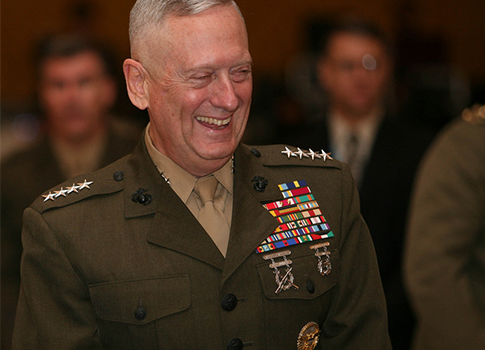
THE EXTRAORDINARY GENERAL MATTIS—A MARINE WITH A WAY WITH WORDS

James Mattis

One of my Army friends sent me an e-mail today containing quotes from General Mattis.

Now I mostly know Army generals—who are typically fairly judicious in their choice of language. They know that a poor choice of words can kill a career faster and more certainly than incompetence in command—even in time of war. As Tom Ricks pointed out in his excellent book, THE GENERALS, generals who don’t perform used to be relieved at a fairly rapid rate—especially during WW II—whereas since then the club of generals looks after its own; and the club does not approve of colleagues who are too outrageous, or grab the headlines. Would General Mattis have achieved four star rank if he been in the Army? Probably not—but he is a Marine.

This isn’t to say that the Army doesn’t produce some truly outstanding general officers—fortunately it does—and some are refreshingly candid (here General Jack Keane comes to mind) but I can’t think of any who come close to matching Mattis’s sheer verbal dynamism and ingenuity. What is more General Mattis fights like he talks.

The following is an extract from today’s e-mail.

Gen. James Mattis, known to his troops as “Mad Dog Mattis,” is retiring after 41 years of military service. The Marine Corps Times is calling Mattis the “most revered Marine in a generation.

Mattis has been commander of the United States Central Command since 2010 and led the 1st Marine Division into Iraq in 2003. According to reports, President Barack Obama decided to force the Marine Corps legend out early because he rubbed civilian officials the wrong way, and forced them to answer tough questions regarding Iran.

Mattis was an inspirational leader of men and his powerful words will go down in history.

Here are some of the best words that the “Mad Dog” has had to offer:

1. “I don’t lose any sleep at night over the potential for failure. I cannot even spell the word.”

(San Diego Union Tribune)

2. “The first time you blow someone away is not an insignificant event. That said, there are some assholes in the world that just need to be shot.”

(Business Insider)

3. “I come in peace. I didn’t bring artillery. But I’m pleading with you, with tears in my eyes: If you fuck with me, I’ll kill you all.”

(San Diego Union Tribune)

4. “Find the enemy that wants to end this experiment (in American democracy) and kill every one of them until they’re so sick of the killing that they leave us and our freedoms intact.”

(San Diego Union Tribune)

5. “Marines don’t know how to spell the word defeat.”

(Business Insider)

6. “Be polite, be professional, but have a plan to kill everybody you meet.”

(San Diego Union Tribune)

7. “The most important six inches on the battlefield is between your ears.”

(San Diego Union Tribune)

8. “You are part of the world’s most feared and trusted force. Engage your brain before you engage your weapon.”

(Mattis’ Letter To 1st Marine Division)

9. “There are hunters and there are victims. By your discipline, cunning, obedience and alertness, you will decide if you are a hunter or a victim.”

(Business Insider)

10. “No war is over until the enemy says it’s over. We may think it over, we may declare it over, but in fact, the enemy gets a vote.”

(Defense News)

11. “There is nothing better than getting shot at and missed. It’s really great.”

(San Diego Union Tribune)

12. “You cannot allow any of your people to avoid the brutal facts. If they start living in a dream world, it’s going to be bad.”

(San Diego Union Tribune)

13. “You go into Afghanistan, you got guys who slap women around for five years because they didn’t wear a veil. You know, guys like that ain’t got no manhood left anyway. So it’s a hell of a lot of fun to shoot them. Actually it’s quite fun to fight them, you know. It’s a hell of a hoot. It’s fun to shoot some people. I’ll be right up there with you. I like brawling.”

(CNN)

14. “I’m going to plead with you, do not cross us. Because if you do, the survivors will write about what we do here for 10,000 years.”

(San Diego Union Tribune)

15. “Demonstrate to the world there is ‘No Better Friend, No Worse Enemy’ than a U.S. Marine.”

(Mattis’ Letter To 1st Marine Division)

16. “Fight with a happy heart and strong spirit”

(Mattis’ Letter To 1st Marine Division)
Flickr

Saturday, March 2, 2013

THE STORY SO FAR: PART 182

WARRIOR AND SON—STAFF SERGEANT SEAN KEOUGH. A SALUTE TO HIS MOTHER, MRS. KRIS KEOUGH

MY APOLOGIES FOR AN OMISSION

When I wrote about Staff Sergeant Sean Keough’s courage some time back—which resulted in his being awarded a Silver Star—I made a major omission. Sadly, his parents are now divorced, and I forgot to mention his mother. My mistake, and one I regret deeply.

The achievements of a son reflects well on both parents. I was reminded of this truth when his mother, Mrs. Kris Keough, wrote to me to thank me for honoring Sean (whom I have known since he was a difficult teenager). I guess the word “difficult” is redundant in such a contest. Let’s put it this way: He was showing character and promise in his own idiosyncratic way—and he certainly delivered.

I have scant idea how to compensate for my errors in judgment. Arguably, the best thing I can do is repeat his citation. If you think about what was involved, and over such an extended period, his conduct was, indeed, awesome.

Acts of courage are always praiseworthy, and should be admired, but courage over a prolonged period is in a league of its own.

Thursday, May 17, 2012

Army Ranger of 2nd Battalion Receives the Silver Star

In a rare public appearance for a tightly-knit special operations unit, awards were presented to members of the 2nd Battalion, 75th Rangers, home based at Joint Base Lewis-McChord in Tacoma, Washington.

One Ranger, Staff Sergeant Sean Keough, received the Silver Star for action against Taliban insurgents during a raid on an enemy compound last autumn.

Leading his squad, Keough saw one of his fellow Rangers shot and fall wounded, still under fire from the enemy. Keough placed himself between the fallen soldier and the enemy, returning fire in order to provide cover for other members of the unit who administered aid and retrieved their downed teammate.

Keough and another Ranger shot an insurgent who attacked them, but he received a gunshot wound to his arm. Despite his wound he remained in place, still delivering effective fire at the enemy while his squad radioed for a medevac.

The attacking force regrouped but Keough refused medical aid that would interfere with his mission, and directed and participated in attacking and overrunning the enemy compound eight hours later. He also received the Purple Heart for his wounds sustained in action against the enemy.

The award was presented by Lieutenant General John F Mulholland, commander of the US Army Special Operations Command. In addition to Keough, the battalion received two Valorous Unit Awards for operations in Iraq and Afghanistan in summer 2005. Seven Rangers received the Bronze Star Medal (‘V’) for actions in combat, and five received the Soldier’s Medal for heroism in a non-combat role for rescuing two stranded climbers on Mount McKinley (Denali) in Alaska, in addition to 17 who received the Purple Heart, among other awards. During this latest deployment, four Rangers and an attached junior officer were killed in action, and many wounded, including 30 as a result of the explosion of an IED.

Since October 2001, the battalion has deployed 14 times and conducted over 2500 raids. It is preparing for its 15th deployment.

Posted by Nicholas Darkwater at 12:09 PM

The figures quoted in this citation are worthy of both consideration and admiration. They reflect an intensity of combat that is practically inconceivable. “14 deployments—2,500 raids?”

Consider the stress and violence of just one.

I am a professional writer, and I just do not have the words to pay adequate tribute to such ongoing courage. Let me salute the entire Keough family.


Orso Clip Art


Sunday, February 17, 2013

THE STORY SO FAR: PART 169

SAD NEWS—IF YOU ARE AN AIRSHIP LOVER LIKE ME

THE U.S. ARMY HAS CANCELLED THEIR LEMV

I have absolutely no idea why I love airships--much as I have no insight as to why I am fascinated by—amongst other things—geodesic domes, high-tech yurts, monorails and FastShips (which are a new type of short, wide, high speed cargo ship designed to fill the gap between fast but expensive air-freight, and slow but less expensive sea-freight). However, clearly I root for the underdog, because these are all marginal areas of technology which—despite their promise—do not seem to have encouraging futures, except possibly, in works of fiction. Of course one never knows. The development of almost any new concept—whatever its merits—tends to be vastly harder than is generally appreciated because it is up against some very powerful forces. The ones that immediately come to mind are vested interests, inertia, ignorance—and lack of money.

In fact, I included an airship sequence in my thriller RULES OF THE HUNT. This was prompted by the very real presence of a Japanese police airship which hovers over Tokyo most of the time—and which is just taken for granted by most people. Presumably, it is packed full of surveillance equipment, but it doesn’t feel intrusive—which is one of the advantages of airships. They can hover, virtually silently, for extended periods of time—days if necessary—high enough to be part of the scenery. In contrast, helicopters are low-flying, noisy, intrusive, extremely expensive to run, and have very limited endurance—typically only two to three hours. All of that said, I will admit that helicopters fascinate me too—and I have faith they can be vastly improved. But, that is another story.

The compromise, where surveillance is concerned, would appear to be drones which are evolving so fast they are rather hard to write about. I tend to feel that by the time I finish a piece on them, the opening paragraphs are already obsolete.

We all know that they are controlled from the ground, sometimes by operators who are thousands of miles away—an extraordinary concept in itself—but perhaps we should be aware that more and more ground vehicles and aircraft can control themselves for much, or all, of their operational time. Whatever be the purpose of such scientific progress, we are talking about a series of major technological achievements here.

Be that as it may, here is a short extract from a recent Wired magazine article. Danger Room is Wired’s excellent military technology section. Highly recommended.

Say goodbye to the Long Endurance Multi-Intelligence Vehicle, or LEMV. Built by Northrop Grumman, it’s a dimpled blimp as long as a football field; seven stories high; and carries a price tag of over half a billion dollars. The plan was to use the blimp over Afghanistan, where its gondola could haul seven tons of cargo — including advanced camera gear able to see dozens of square miles of terrain with crystal-clear resolution at a single blink. It would stay 20,000 feet above the warzone for weeks at a time, something beyond the capabilities of any spy plane, manned or piloted. Trials over Afghanistan were slated for early this year.

Not anymore. A report in InsideDefense citing anonymous sources said LEMV quietly met the Army budget axe last week. The Army confirmed it, on the record, to Danger Room late on Thursday.

It strikes me as quite an achievement to get the price of a single blimp—even with a dimple—up to over half a billion dollars (that is “billion” with a “b.”). But Northrop Gruman, the very model of a modern high cost, high margin, defense contractor, doesn’t really think in small figures, even though it never actually designed the aircraft. That distinction belongs to Hybrid Air Vehicles of the UK who rightly felt they needed a U.S. alliance if they were ever to crack the U.S. defense market. Many have had the same thought and perished in the process. 

Why “Hybrid” in the name?

Well, the LEMV actually gets only 60% of its lift from helium and the remaining 40% from aerodynamic lift. That makes it hybrid in terms of lift—and much easier to control. For instance, on the ground its own mass keeps it in place and it can move around on built-in air-cushions—rather like a hovercraft. Similarly, in the air, its own mass makes it much more stable in adverse weather conditions. Because it needs to be actively flown to obtain part of its lift, that makes the engines much more important, and it is noteworthy that the designers have planned in roughly ten times the power than would normally be available on a traditional blimp.

There is a civilian version of the LEMV known as the Airlander. One of the great advantages of such an aircraft is that theoretically it can airlift considerable quantities of material—50 tons has been mentioned—over great distances much more economically than by conventional aircraft; and it can land and take off from any cleared, relatively flat area—without the need for either a runway or ground crew. These are huge advantages.

Will this ever actually happen? Not unless more money is invested in this area. Great ideas tend to need fine-tuning to get the end result perfected, and that requires development money. 

Surveillance apart—which was the U.S. Army’s area of initial interest, potential applications are many and various. Appreciate the advantages of being able to transport heavy loads over considerable distances in a cost efficient manner without the needs for either roads or airports—while remaining unaffected by the terrain below, whether it be land, water or ice. Whole areas of the world would become accessible at last. Significant aid could be brought in fast after disasters—especially where the roads and bridges have been destroyed.

I have no idea whether Hybrid Air Vehicles have a sound design as yet or not, but this is a concept that really should be pursued.


Orso Clip Art

Saturday, November 27, 2010

WE ALSO SERVE WHO REWRITE

M1A1 Abrams TankImage by San Diego Shooter via Flickr
"A battle is fought to be won!"


Department of Excellent Writing Advice
As part of learning how to blog – and these days I sometimes wonder whether I’m not more student than writer (or whether the terms should not be interchangeable), I’m currently subscribing to a number of blogs who specialize in giving blogging advice and advice on writing in general.

I’m not just interested in the specifics of such advice, but how they present themselves in general. Inevitably, there are similarities, but all the good blogs have distinctive personalities.

Today, Walt Shiel, author of VIEW FROM THE PUBLISHING TRENCHES http://www.waltshiel.com  offered a nugget that resonated:

“Begin your writing, fiction or article, where the action begins. This action can be internal (e.g. An important insight or personal decision) or external (e.g. a calamity or key even). Begin too early and you lose your reader. Begin too late and you lose your story.”

Now that is good writing.


Department of Book Doctors
Editors used to do all that that is necessary when it comes to critiquing and developing a book. Unfortunately, with the ever increasing of the corporate ownership of publishers followed by the inevitable pressure to cut costs, the editors of traditional publishing houses rarely have the time to do what may be necessary. 

That is a pity for all sorts of reasons starting with the fact that even the most talented writer cannot bring perspective to his or her own work.

Enter ‘Book Doctors’ who do much the same thing as editors used to but who are prepared to do even more than a commercial editor to save book. Here I refer you to Jason Black at PLOT TO PUNCTUATION  www.plottopunctuation.com  I have neither met Jason, not done business with him; but his site is impressive.

I have done some book doctoring myself, and once spent six exhausting months on a project trying to rescue and restructure a truly excellent book about THE BATTLE OF 73 EASTING. The topic was the famous tank battle that took place in the first Gulf War in 1991. The patient survived and you may read the result as WARRIOR’S RAGE by Douglas Macgregor.  

I should probably have claimed co-author status, but he was the one who had been under fire and had seen his men die so it was, quite rightly, HIS story; and a fascinating one at that. 

We also serve who re-write.

I have to say it is a pretty good book.


Enhanced by Zemanta