Saturday, December 20, 2014

(#80-1 ) December 20 2014. A prosperous American Middle-Class. Well, it was a nice idea.

MIDDLE-CLASS WEALTH

VICTOR - SHOT BY MICK - ENHANCED

NOW YOU SEE IT—NOW YOU DON’T

br tue reads

Talk about British ‘stiff upper-lips.’ and ‘sang-froid!’

Most Americans seem to be taking the destruction of their class and modest wealth in their stride. There are no marches on Washington DC, rioting in the street, blocking of roads—or indeed any signs at all that a couple of hundred million people are having their economic throats cut (rather slowly, but inexorably) and are quietly bleeding to death.

And here we are afraid of ISIS. The real enemy is much closer at hand.

Could the situation be turned around? Sure—but not unless people wake up and realize just how fast things are deteriorating. And there are no real signs of that.

I can but shake my head in wonder. Are we The Working Dead already (though all too many of us—over 90 million—aren’t working)?

It would appear so.

Scary, don’t you think?

VOR words 150.


Friday, December 19, 2014

(#79-1) December 19 2014. The stock market is up. Your real earnings are down. I just thought I would let you know.

FINANCIALIZATION IS A MAJOR U.S. PROBLEM

VICTOR - SHOT BY MICK - ENHANCED

A DOLLAR EARNED IN RESEARCH MAKES THE ECONOMY $5 BETTER OFF

A DOLLAR EARNED IN FINANCE MAKES THE ECONOMY 60 CENTS WORSE OFF

I have long known and argued that the American Business Model is broken—or deeply flawed, to use a less emotive phrase—but there is surprisingly little discussion about it.

Here, I am strongly critical of President Obama and his economic team for not raising this issue and using the bully pulpit to wake up We The People—if, indeed, that is possible.

Currently, we seem to be in mass denial, politically supine, and wedded to the economic status quo—even while that economic system is making most of us poorer year by year.

The information is out there—and most people are painfully aware of their own circumstances—but there seems to be no mass concern or populist movement probably because neither the media nor the politicians want to talk about it (with the exception of Senator Elizabeth Warren).

The lack of sustained mass media outrage is deeply concerning. It is hard not to form the view that this inaction is deliberate and stems from the ownership and structure of our media.

It makes you appreciate how Hitler got into power—and recall that he was elected. If a democracy ceases to be genuinely interactive—in the sense of our politicians genuinely representing the people—and the media don’t do their job or are muzzled by their owners—then truly bad things can happen—and they are.

Fortunately, the Washington Post is publishing a major series on this mess—and perhaps that will have some impact. Kudos to Jeff Bezos.

The following is an extract from the Washington Post The full piece is well worth reading.

Wall Street is expanding, and the economy is worse off for it.

Written by Jim Tankersley

Photos by Bonnie Jo Mount

Produced by Emily Yount, Dwuan June

Published on December 16, 2014

There’s a prominent theory among some economists and policymakers that says the big problem with the American economy is that a lot of Americans don’t have the talent to compete in today’s global marketplace. While it’s true that the country would be better off if more workers had more training — particularly low-skilled, low-income workers — that theory misses a crucial, damaging development of the past several decades.

It misses how much the economy has suffered at the hands of some of its most skilled, most talented workers, who followed escalating pay onto Wall Street — and away from more economically and socially valuable uses of their talents.

The financial industry has doubled in size as a share of the economy in the past 50 years, but it hasn’t gotten any better at its core job: getting money from investors who have it to companies who will use it to generate growth, profit and jobs. There are many ways to quantify how that financial growth-without-improvement hurts the economy.

In 2012, economists at the International Monetary Fund analyzed data across years and countries and concluded that in some countries, including America, the financial sector had grown so large that it was slowing economic growth. Using a different methodology, the most prominent researcher on the size and economic value of Wall Street, a New York University economist named Thomas Philippon, estimates that the United States is sinking nearly $300 billion too much annually into finance.

Perhaps most starkly put, economists from Harvard University and the University of Chicago wrote in a recent paper that every dollar a worker earns in a research field spills over to make the economy $5 better off. Every dollar a similar worker earns in finance comes with a drain, making the economy 60 cents worse off.

It’s not that finance is inherently bad — on the contrary, a well-functioning financial system is critical to a market economy. The problem is, America’s financial system has grown much larger than it should have, based on how well the industry performs.

VOR words 215


Thursday, December 18, 2014

(#78-1) December 18 2014. A rose by any other name wouldn’t be a rose—and it mightn’t be the best name for a macho hero..

THE NAMES OF CHARACTERS

VICTOR - SHOT BY MICK - ENHANCED

THE CHARACTERISTICS OF NAMES

I regard both the book title and the book name as being extremely important. I’m not talking in terms of sales—though it is important there too—but in the context of writing the book (the work bit). 

That’s the part of the book business that really turns me on—though many consider it the most difficult. Well, it is—but it does!

Without a title, I find it virtually impossible to focus. Beyond that, a title sets the tone. Blood Chills probably won’t be a fairy story.

Difficult though it is to come up with a really good book title, my primary concern is to find the right names for my characters—and particularly for my main protagonists (my heroes, if you will). So far, I have only three:

  • HUGO FITZDUANE—who is the main protagonist in four books to date.
  • HARRY FREMONT—who, so far, features in only one, though I plan to use him again.
  • ALEX FINN—who is more of an anti-hero. I really like him but haven’t yet come up with a follow-on tale.

Where Hugo was concerned, I picked the first name of a good friend of mine, Hugh O’Donnell, and then made up the second. I took ‘Fitz’ from Fitzgerald, and then added ‘Duane’ from a business connection because I looked the look of it. I still do, but it was a debatable choice because people mispronounce it. I think and pronounce it ‘DWANE’ but some of my readers seem to think of it as ‘DOO-AN.’ Just to make life even more confusing, Duane is also pronounced DWANNE in Ireland (at times).

Dear oh dear! Still, I’m not going to change it now.

Harry Fremont came fairly easily. Harry is the first name of my friend, Harry Cartland, a nuclear scientist whom I first met in Livermore when I went to see their supergun being shot. And Fremont comes from the explorer. I thought of spelling it ‘FREEMONT’ to make it reader-proof, but I prefer the look of the shorter version, and the California associations.

As for Alex Finn, I have always liked the name ‘Alex’ and I ran across ‘Finn’ by chance. He actually has two names because he is a writer. His pen name is Jack Finnian.

I normally think of my principal characters first and let the story evolve from there. In fact, Fitzduane existed for years before I found Hangman (literally, as you will know). However, I’m now working on a book where I have had the story for years, but not a lead character.

How is that possible?

Now I am working to remedy that rather fundamental omission. Of course, I have long known what my protagonist does—he is an Army general—but now he is beginning to have a name, the story is leaping forward—almost of its own volition.

I say “beginning to have a name” because I have come up with a surname I’m happy with, but not a first name.

If all this sounds like a fuss over nothing—after all any telephone directory (remember those?) will give you a list of perfectly good names.—all I can say is that it’s important to me. Further, I suspect the process of thinking of a name helps me with the development of the character.

The trouble with using the name of a real person is that there is a danger of confusing the real person with one’s fictional character. In fact, that is what led me to evolve Fitzduane. That said, I seem to be over that hump now. I guess my ability to focus on a story has improved.

When I first started, I used to forget the names of my subsidiary characters which could be damnably confusing. Hugo’s girlfriend would start off as ‘Mary’ and then by page 93, she would have become ‘Diana.’

Talk about an identity crisis!

Now, I still forget names but am a little more disciplined and organized so I keep a master list and, if in doubt, I look it up—if I remember that I have a list.

A really good name should be”

  • Distinct
  • Be pronounceable in only one way
  • Be evocative.
  • Not be that of a real person.
  • Be no longer than it needs to be
  • Have no dominant associations.
  • Not be too generic

Do I always follow my own rules?

Of course not. I’m a writer. We’re not exactly known for following rules unless they involve either spelling or grammar.

VOR words 748.


Wednesday, December 17, 2014

(#77-1) December17 2014. The long and the short and the tall of it.

THOUGHTS AND CONCERNS ABOUT

VICTOR - SHOT BY MICK - ENHANCED

KEEPING WELL INFORMED—AND A LOVE STORY

Writing—as far as I am concerned—is, essentially, about ideas which you then convert into entertaining, but provocative and informative, written words. Whether you write them with the aid of a computer or a quill pen is neither here nor there (until your computer breaks down).

Every writer needs to keep a long-tailed bird handy. Use your blood for ink. You will shed it writing anyway.

Entertaining comes first because if you don’t hold your reader’s attention, he or she won’t read on and the whole exercise becomes pointless (except for the pleasure you get from actually writing—which is no minor thing).

By provocative, I mean I like to make people think—to engage their interest. Informative speaks for itself and reflects my preference for being a little wiser after I have read something. I don’t want to overstress informative, but I have certainly learned as much by reading novels as I have from deliberate studying. Apart from anything else, reading fiction taught me to write.

Mind you, I’m realistic enough to know that all my readers don’t read on. Reading is a very personal skill, people have diverse interests, some don’t like my sense of humor—and so on. Today, we have a major problem with focus. There are now so many distractions that concentrating on reading for sustained periods has become more difficult.

Am I offended when I hear someone hasn’t finished one of my books? No. I do register a slight pang—but I’m now secure enough in my work that I take such disappointment in my stride. I know perfectly well I can’t please all of the people all of the time—and don’t try to.

We now come to the question of where a writer gets ideas from in the first place. ‘Everywhere’ is the short answer. Some writers do no research, rely solely on their inner feelings—and produce wonderful work. Others do extensive research—and produce rubbish. Yet another group lead such interesting lives they have more to write about than they know what to do with it.

They say it is what you leave out that makes the book. Is that true? No—but it sounds cool.

My preference is to keep well informed, and then supplement such a base of knowledge with focused research. That’s a more time-consuming approach but immensely satisfying. I also try to lead an interesting and adventurous life—and have been largely successful in that regard.

There is a high cost to leading an interesting and adventurous life—but I happen to think it is worth it. That said, I don’t look down on others who opt for a regular paycheck. It’s a personal decision.

But what is being well informed? Yesterday I spoke to a truly delightful and intelligent woman who—quite deliberately—doesn’t follow the news. That observation made me question my own pattern of gathering information.

Her argument is that the news, as presented, is primarily negative, and does not, in fact, give one a balanced view of life.

I think she is right—and I’m far from sure being an information packrat is good for me—but since I’m innately intellectually curious I work with what is available.

Am I comfortable with that? No. I’m well aware that the news, as such, is selective, manipulative, inadequate, and distorted—but I try and supplement it in as many ways as I can with more specialized research. I also filter out a great deal of what passes for news. I really don’t need to know about a train accident in India. I am interested to know about the issues that affect our daily lives—and I also have specific areas that I follow.

I think that the most important point that she made is that the news tends to stress the negative.

Funnily enough, I have been thinking about exactly this point recently though from a different angle. I have been struck by the contrast, in this country in particular, by the negativity at the top contrasted with the many commendable achievements that are happening every second of every day in what one might think of as the real world.

Why are the media so negative? They would argue that they are solely responding to what the public wants—and that “if it bleeds, it leads,” works.

I’m not so sure it is that simple. For instance, much modern media can be traced back to the political pamphlets that were all the rage in the eighteenth century—and which were unequivocally partisan. Also, I hold to the view that the media condition our expectations to a considerable extent, so what we are witnessing is something of a self-fulfilling prophecy.

We then come to the issue of who owns the media. I don’t think we are best served by the media being owned by a small number of extremely rich men who will do just about anything to make themselves even richer—and more powerful. I would prefer to see the media owned and operated by trusts. I’m a believer in capitalism, but of a qualified sort. I regard the media as being too important to be be left to the whims and monopolistic tendencies of private enterprise and corporate agendas. 

In truth, I doubt that trusts alone are the answer to the question of media ownership, but I am convinced that you need wide choice and that media monopoly is dangerous and destructive. I am also convinced that we, in America, aren’t nearly concerned enough about the health of our media.

Personally, I don’t currently have TV so, by definition, I don’t watch TV news (and certainly don’t miss it). Instead, I keep myself as well informed as I feel my writing requires—a significant qualification—through the radio and a fairly wide range of online magazines. I guess my favorite is www.theatlantic.com which certainly isn’t negative, but which will cover just about anything if it is interesting—and in depth. The Atlantic believes in context..

Where the positive is concerned, I never fail to get a lift from reading www.gizmag.com which focuses entirely on technological breakthroughs. Read it, and you cannot but wonder at man’s ingenuity. It also makes me wonder why—when we have so many answers—we don’t apply them. Technology certainly isn’t the answer to everything, but it can make a major contribution to resolving a whole range of issues from housing to global warming.

Since my researched action novels largely focus on terrorism and military conflict, I do spend what a more balanced person might consider an excessive amount of time keeping up to speed in these areas. Here, I can’t really defend my interests. I might, indeed, be better as a person if I focused instead on improving the environment.

But we have a tendency to do what we know and what we are good at—and this grim world is one I know, that fascinates me, and where I have a deep understanding—which translates into an ability to write compelling books (or so my readers tell me).

For what it is worth, I also write humor, about the economy, sex, satire—and even about the environment. I have an ambition to write at least one really good love story before I die.

Will I need to research that?

I don’t think I am that cold-blooded—and I am romantic. Still, if I thought a great story would result…

As far as I am concerned, writing about pretty much anything, is joyous work. Sometimes research can be joyous too.

VOR words 1,250.


Tuesday, December 16, 2014

(76-1) December 2014. It’s a great thing that we can’t read each other’s minds—and heartbreakingly sad.

I REMEMBER THE DAY

VICTOR - SHOT BY MICK - ENHANCED

WHEN PEOPLE TALKED ON PHONES

We can now communicate by phone technically—faster, better, and in more ways than ever before in human history, but I’m far from sure we are actually communicating in a human sense more effectively.

Odd that I should be commenting on this. I put great effort into avoiding telephonic interruptions so I can focus on writing, so I should be the last person complaining. Nonetheless, I do find it mildly frustrating that it has become so hard to return a phone-call. Typically, I find a machine—even if I have been talking to that person 30 seconds ago. I guess keeping your answering machine on permanently has become the new normal..

Sometimes I wish the new normal would just go away.

The answer is, of course, to text. I should approve of that since it involves writing, but I’m embarrassed to say I haven’t yet taught myself to text. I have no excuses. My new phone has a QWERTY keyboard and I have two perfectly good fingers. What more does a writer need?

Angst?

Merely, being a writer brings angst with it. 

But, sentimentalist that I am (I’m not sure that is how my friends would describe me) I miss the sound of people’s voices. You can tell so much from a voice—particularly in a relationship. Or you think you can.

I once had a Swiss girlfriend whose big thing was the passionate statement followed by the long meaningful pause. These were exciting, but costly at international rates in those days. Her sighs and silences were not just’ passion. Her English left a great deal to desired, and the less said about my Swiss-German the better.

No—I’m not talking about phone sex here. This was romance—utterly enchanting.

I had three Swiss girlfriends over the years so clearly I am a glutton for punishment. One offered to support me while I wrote—an offer I was too proud to accept.

Advice to aspiring writers: Only an idiot turns down an offer like that.—and she was a lovely woman.

One thing I have noticed is that concurrent with the truly dramatic improvement in our means of communication, trust has declined—and massively at that. No, I don’t mean with the Swiss. I mean in the U.S.

Does that mean the more we encounter our fellow humans, the less we like them?

It’s an interesting hypothesis—but one may have nothing to do with the other. My other theories are that:

  • The lessons of the 2008 Great Recession have finally hit home and people finally understand that Financialization is a Bad Thing (We should be so lucky).
  • People are so traumatized by the internet and the speed of change that they no longer know where to turn or who or what to trust (I rather fancy this one).
  • So many people are on drugs—legal and otherwise—that they have become paranoid (Combine that with the second option and I think we are in business).

Thank God for the complexity of the human condition and our impressive ability to misunderstand each each under just about any and all circumstances.

Writing would be a great deal harder without such attributes. Don’t forget we novelists need conflict to keep our writing interesting.

It does not seem to be in short supply.

VOR words 554.


Monday, December 15, 2014

(#75-1) December 15 2014. Christmas is a very special time as far as I am concerned—but I have other thoughts on my mind today—solar power for one.

40% AND CLIMBING

VICTOR - SHOT BY MICK - ENHANCED

SOLAR POWER TO THE PEOPLE

Ever since I tried to set fire to things at school with a magnifying glass (lots of luck in cold, wet, windy Yorkshire, England in the winter) I have always believed in solar energy. And no, I didn’t burn ants and small multi-legged creepy things. That was never my thing.

I was much more concerned with two legged creepy things of the human variety—and by the time I went to Ampleforth, my school in Yorkshire, I was big enough not to have to resort to weaponry. Also, there was very little physical bullying bullying there—a fact which stands greatly to the credit of the school.

Yes, I was badly bullied for years—but that was at my previous prep school in Ireland, St. Gerards,  where I was just too damn small to defend myself ( because I was sent to boarding school too young). Fortunately I both grew and learned The Sheepman principle.

What is that? Sometimes, if you want to be left alone, you need to make an example. In my case a number of examples were involved, but the principle was the same.

The Sheepman was a 1958 Glen Ford movie which starts with Ford picking a fight with the biggest man in the saloon he can find (he wins, of course) just to make the point that he can look after himself. He needs to be able to. He is bringing sheep into cattle country. Shirley MacLaine played the female lead.

Apropos of nothing except name-dropping—I was to meet Shirley some years later at a neighbor’s party in Ireland. We had some interesting neighbors. This one was a movie producer called Kevin McClory who was to gain fame by suing Ian Fleming for the movie rights of Thunderaball—and winning. He went on to make the movie. Look down at the poster—bottom left—there he is.

I had a teenage crush on Kevin Mclory’s wife, Bobo—an heiress and drop dead gorgeous blond—which I am not sure I’m quite over.

Well, its only been about 55 years.

She spent a great deal of time at our house when the Ian Fleming case was on—it was a very tense time for her. The trial only lasted nine days—more is the pity. Having Bobo hang with us certainly spiced up the day.

Years later, I summoned up the nerve to invite her to lunch (I have no idea what excuse I used, and I am truly surprised I was that courageous). She and Kevin were divorced by that time—and I have rarely had a more delightful meal, or pleasanter company.

After the lunch—which lasted until mid afternoon—I got a kiss, and an invitation to stay when I was next up in Dublin—I was living in my thatched cottage in West Waterford at the time.

I never followed up. It’s hard to top perfection. Bobo was not only beautiful—with sex appeal to match (they don’t always go together) but she was a thoroughly nice human being. She still is, I hope. She married a prince—and I lost track of her.

She deserved to marry a prince—and I can think of no finer princess.

It’s quite a thing when you meet someone who is that attractive—whose character seems to match.

Where men are concerned—since I am still in name-dropping mode, Gregory Peck, Alec Guinness, and Kenneth More come to mind—all thoroughly nice people. Regarding women. I think instantly of Peggy Lee.

As doubtless you know, being thoroughly nice is not always the case where where celebrities are concerned. That said,now I think of it, most of the movie stars I have met—and the few I have got to know—have been pretty agreeable, and, once talking, very human.

I suspect being a celebrity today is more difficult. We now have the twenty-four hour news cycle with a celebrity oriented culture to match—and that must fray the nerves.
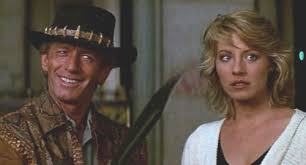
But enough of such memories. What I really wanted to comment on is the amazing progress of solar power. The University of New South Wales (located on Crocodile Dundee’s continent) has achieved efficiencies of 40 percent—which is just plain bloody remarkable!

No, I’m not using bad language. I’m just speaking Australian.

"This is the highest efficiency ever reported for sunlight conversion into electricity," said UNSW Professor Professor Martin Green, Director of the Australian Centre for Advanced Photovoltaics (ACAP).

The record was achieved using a combination of technologies, including heliostat mirror "power tower" concentrators from Australian company RayGen Resources and high-efficiency photovoltaic (PV) cells from Boeing subsidiary, Spectrolab, but the key component to achieving such a high-efficiency was in the use of a specifically-designed optical bandpass filter used to reject certain components of the light spectrum whilst improving the capture of others. This helped to vastly improve the conversion of light to electricity at a higher efficiency than possible using PVs alone.

"The new results are based on the use of focused sunlight, and are particularly relevant to photovoltaic power towers being developed in Australia," said Professor Green.

"We used commercial solar cells, but in a new way, so these efficiency improvements are readily accessible to the solar industry," added Dr Mark Keevers, the UNSW solar scientist and manager of the project.

Median installed system prices for residential PV Systems in Japan, Germany and the United States ($/W)

History of PV roof-top prices since 2006. Comparison in US$ per installed watt.[4][5]

RED Japan

BLUE United States

GREEN Germany

I recall having a conversation with my friend, Greg Wilcox—who then worked at SRI—and he referred to work his organization had done and said it didn’t look too encouraging.

I thought otherwise.  I’m rather glad I’m being proven right. Inexpensive solar power is going to transform our lives for the better in ways we can’t even begin to imagine.

Funnily enough, Greg phoned a day or so ago, and we had a long chat about military matters. There, I bow to his superior experience and distinguished career. He served no less that three tours in Vietnam—despite being severely wounded during his second. He is a man of true courage—and a fascinating military thinker.

As someone who hasn’t served in the military—other than have been in the equivalent of the ROTC—why do I think I can make a contribution as well?

Though I have been in harms way on several occasions, and have lived with terrorism for many years in both the UK and Ireland, I don’t pretend for a moment that my relatively brief periods of exposure to danger parallel the sustained exposure of warriors like Greg.

But what I can bring to the discussion is considerable knowledge, adequate experience so I have a sense of things, keen interest, and a creative mind. In addition that those assets, I have perspective—an extremely useful attribute. Perspective is a fine thing in itself—but I try and link it to an open mind. The military mind has many strengths, but openness is not one of them. The pressure to conform is great and questioning the status quo is scarcely career enhancing.

I guess I bring two other assets to the fight. I have an extensive network of military friends—and I can summarize their disparate ideas and communicate them.

Fundamentally, I guess, my role is to communicate. I feel honored to be allowed to do so. It’s hard not to loathe the end results of what the military do—we are talking destruction, death, grievous bodily injury, and misery here—but most of the military I know dislike these aspects as much as I do—and are fine people.

Or maybe I am just fortunate enough to have terrific friends. In truth, I think the truth is a mixture of both—but it is a fact that that the demands of the military—especially in the early years—do stretch people to their limits and beyond—and the outcome can be character-building and impressive.

Unfortunately, defense involves money—truly massive quantities of it—which all too often leads to careerism and  corruption. It is personified by the MICC—the Military Industrial Congressional Complex—but that is a story for another day.

My closing thought is a question: Is money always corrupting?

Well, that particular issue is rarely a problem for writers—not that I am complaining. The satisfaction I get from writing more than compensates.

As for money, I am reminded of what Lord Acton says about power.

All power corrupts—and absolute power corrupts absolutely.

VOR words 1,400.


Sunday, December 14, 2014

(#74-1 ) December 14 2014. Speaking as a change-maker (which, for better or worse, I am) one of the great things about change is that just when you think your cause is hopeless—too many vested interests, too much ignorance, too much inertia—too few resources at your disposal—change starts to happen. The problem is—despair (or close) comes first. The trick is to not quite go over the edge. Cling on! That’s why the gods gave you finger-tips. They are also useful for poking the doubters in the eye—AFTER you have achieved your goal. You probably won’t though. You’ll be focused on the next adventure.

THROUGHTS ON THE STRESS OF CHANGING THINGS

VICTOR - SHOT BY MICK - ENHANCED

EMOTIONAL RESILIENCE IS THE KEY—THE ABILITY TO ROLL WITH THE PUNCHES, TO KEEP YOUR COOL

I DON’T HAVE IT—OR NOT ENOUGH OF IT (THOUGH I SEEM TO BE GETTING BETTER).

I GET HURT WHEN I FIGHT FOR A CAUSE. I HESITATE, I FALL, I FREEZE. I TRULY WISH I WAS AS RESILIENT AS THE CHARACTERS IN MY BOOKS.

ALL I CAN SAY IN MY FAVOR IS THAT I PICK MYSELF UP AND KEEP GOING. I’M DAMNED IF I KNOW WHY. SOMETIMES, I’M DAMNED IF I KNOW HOW.

I KEEP GOING ANYWAY.

I GUESS, IT APPEALS TO MY SENSE OF HUMOR

The British financial newspaper, The Financial Times, once ran a piece—it was some decades ago (pre-internet)—called THE ART OF BEING SECOND.

The thesis was that innovation—indeed effecting significant change of any kind—was so tough that the pioneers often ended up exhausted and the opportunists reaped the rewards. They then supported their argument quite convincingly with a series of case histories.

The lesson was clear—and was spelled out. To be first was dumb. Much better to hold back, and then nip in and claim the prize.

Change-makers, pioneers, innovators and similar adventurers tend not to be deterred by that kind of argument—however valid it may be. We tend to do what we do because we have to. We are driven by our passion—and so we continue virtually regardless of the consequences. Such is our nature.

The fates cheated me a bit. They gave me most of the attributes of a  true adventurer—including an  impressive ability to get myself into difficult situations and go up against impossible odds, but then they topped up this impressive package—they included considerable imagination and intelligence into the bargain—with the heart of a cowardly lion.

Then they threw in a sense of humor. It tipped the scales.

I keep going.

Besides, despite my doubts and rocky ability to mange my fears, I truly love what I do. The arena of thoughts into written words is a magic place full of powerful, stimulating, entertaining and significant ideas—some are dangerous—and I get to play in it all day, and sometimes until late at night.

The sand covers the blood that is spilled—and plenty is. Well, what else can you expect in an arena?.

What is not to love? I may even learn to embrace my fears.

VOR words 399