I WAS ALWAYS TAUGHT THAT CONTENTMENT WAS ABOUT AS MUCH AS ONE COULD ACHIEVE IN THIS WORLD.

I AM NO LONGER SURE THAT IS TRUE.
AS FAR AS I’M CONCERNED, WRITING IS HAPPINESS.
I WAS ALWAYS TAUGHT THAT CONTENTMENT WAS ABOUT AS MUCH AS ONE COULD ACHIEVE IN THIS WORLD.
I AM NO LONGER SURE THAT IS TRUE.
AS FAR AS I’M CONCERNED, WRITING IS HAPPINESS.
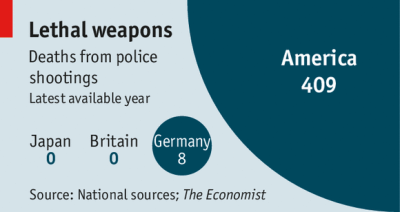
BY AND LARGE, I STEER CLEAR OF THE GUN ISSUE IN THE U.S. I WRITE THRILLERS—WHICH FEATURE GUNS AND VIOLENCE—SO WOULD FEEL SOMEWHAT OF A HYPOCRITE IF I WAS CRITICAL
YET THE STATEMENT THAT GUN VIOLENCE COSTS $229 BILLION PER YEAR--MORE THAN $700 PER AMERICAN—HAS MY ATTENTION.
HOW MUCH PAIN AND SUFFERING DOES THAT REPRESENT?
DO PEOPLE REALIZE JUST HOW BADLY THEY ARE SERVED BY THE FINANCIAL INUSTRY?
IF THEY DO, THEY SEEM REMARKABLY ACCEPTING OF THE MOST EGREGIOUS PATTERNS OF SUSTAINED EXTORTION
I have frequently recommended http://www.ritholtz.com/ The following is an example of why I do. Barry Ritholtz works within the financial industry, but seems to march to the beat of a very different drum. His daily newsletter is just plain admirable.
The Fiduciary Standard is Coming!
by Barry Ritholtz - April 20th, 2015, 12:00pm
In 2011, the Securities and Exchange Commission published a study, mandated by the Dodd-Frank Act, which concluded that all financial advisers and stock brokers should be placed under “a uniform fiduciary standard.” Basically this meant that brokers and advisers would have an obligation to put the interests of clients first and must disclose any conflicts of interest that might compromise that duty.
Wall Street was none too happy about this. The industry spent tens of millions of dollars lobbying to prevent this standard from becoming the law of the land. Indeed, of all the regulatory reforms that have come out of Dodd-Frank, nothing seems to displease the financial industry more than the proposed fiduciary rules.
Although other reforms may be inconvenient and clunky, the proposed rules probably would cut Wall Street’s fees, potentially by a lot. This is a radical change from the current rules, which allow a universe of products, costs and behaviors that history teaches us are contrary to the client’s best interest.
The jousting over standards comes amid the awful results that investors have had in their tax-deferred retirement accounts. As too many studies have confirmed (see this and this), the typical 401(k) or individual retirement account investor barely earns 2 percent a year on their savings. In the years since the Employee Retirement Income Security Act (Erisa) rules went into effect in the 1970s, the average portfolio with a 60-40 split of stocks and bonds should have returned almost four times that much.
Although poor investor decisions are part of the problem — chasing hot money managers, jumping in and out of funds, trying to time the market — high fees associated with conflicted advice have also been a persistent drag on returns.
‘High fees’—such a simple phrase, such devastating consequences.
A HEADLINE I AGREE WITH ABSOLUTELY
Business didn't always have so much power in Washington.
Something is out of balance in Washington. Corporations now spend about $2.6 billion a year on reported lobbying expenditures—more than the $2 billion we spend to fund the House ($1.18 billion) and Senate ($860 million). It’s a gap that has been widening since corporate lobbying began to regularly exceed the combined House-Senate budget in the early 2000s.
Today, the biggest companies have upwards of 100 lobbyists representing them, allowing them to be everywhere, all the time. For every dollar spent on lobbying by labor unions and public-interest groups together, large corporations and their associations now spend $34. Of the 100 organizations that spend the most on lobbying, 95 consistently represent business.
One has to go back to the Gilded Age to find business in such a dominant political position in American politics. While it is true that even in the more pluralist1950s and 1960s, political representation tilted towards the well-off, lobbying was almost balanced by today’s standards. Labor unions were much more important, and the public-interest groups of the 1960s were much more significant actors. And very few companies had their own Washington lobbyists prior to the 1970s. To the extent that businesses did lobby in the 1950s and 1960s (typically through associations), they were clumsy and ineffective. “When we look at the typical lobby,” concluded three leading political scientists in their 1963 study, American Business and Public Policy, “we find its opportunities to maneuver are sharply limited, its staff mediocre, and its typical problem not the influencing of Congressional votes but finding the clients and contributors to enable it to survive at all.”
Things are quite different today. The evolution of business lobbying from a sparse reactive force into a ubiquitous and increasingly proactive one is among the most important transformations in American politics over the last 40 years. Probing the history of this transformation reveals that there is no “normal” level of business lobbying in American democracy. Rather, business lobbying has built itself up over time, and the self-reinforcing quality of corporate lobbying has increasingly come to overwhelm every other potentially countervailing force. It has also fundamentally changed how corporations interact with government—rather than trying to keep government out of its business (as they did for a long time), companies are now increasingly bringing government in as a partner, looking to see what the country can do for them.
If we set our time machine back to 1971, we’d find a leading corporate lawyer earnestly writing that, “As every business executive knows, few elements of American society today have as little influence in government as the American businessman, the corporation, or even the millions of corporate stockholders. If one doubts this, let him undertake the role of ‘lobbyist’ for the business point of view before Congressional committees.”
That lawyer was soon-to-be Supreme Court Justice Lewis F. Powell Jr., whose now-famous “Powell Memorandum” is a telling insight into the frustration that many business leaders felt by the early 1970s. Congress had gone on a regulatory binge in the 1960s—spurred on by a new wave of public-interest groups. Large corporations had largely sat by idly, unsure of what to do.
In 1972, against the backdrop of growing compliance costs, slowing economic growth and rising wages, a community of leading CEOs formed the Business Roundtable, an organization devoted explicitly to cultivating political influence. Alcoa CEO John Harper, one of the Roundtable’s founders, said at the time, “I think we all recognize that the time has come when we must stop talking about it, and get busy and do something about it.”
This sense of an existential threat motivated the leading corporations to engage in serious political activity. Many began by hiring their first lobbyists. And they started winning. They killed a major labor law reform, rolled back regulation,lowered their taxes, and helped to move public opinion in favor of less government intervention in the economy.
By the early 1980s, corporate leaders were “purring” (as a 1982 Harris Poll described it). Corporations could have declared victory and gone home, thus saving on the costs of political engagement. Instead, they stuck around and kept at it. Many deepened their commitments to politics. After all, they now had lobbyists to help them see all that was at stake in Washington, and all the ways in which staying politically active could help their businesses.
Those lobbyists would go on to spend the 1980s teaching companies about the importance of political engagement. But it would take time for them to become fully convinced. As one company lobbyist I interviewed for my new book, The Business of America Is Lobbying, told me, “When I started [in 1983], people didn’t really understand government affairs. They questioned why you would need a Washington office, what does a Washington office do? I think they saw it as a necessary evil. All of our competitors had Washington offices, so it was more, well we need to have a presence there and it’s just something we had to do.”
To make the sell, lobbyists had to go against the long-entrenched notion in corporate boardrooms that politics was a necessary evil to be avoided if possible. To get corporations to invest fully in politics, lobbyists had to convince companies that Washington could be a profit center. They had to convince them that lobbying was not just about keeping the government far away—it could also be about drawing government close.
As one lobbyist told me (in 2007), “Twenty-five years ago… it was ‘just keep the government out of our business, we want to do what we want to,’ and gradually that’s changed to ‘how can we make the government our partners?’ It’s gone from ‘leave us alone’ to ‘let’s work on this together.’” Another corporate lobbyist recalled,“When they started, [management] thought government relations did something else. They thought it was to manage public relations crises, hearing inquiries… My boss told me, you’ve taught us to do things we didn’t know could ever be done.”
As companies became more politically active and comfortable during the late 1980s and the 1990s, their lobbyists became more politically visionary. For example, pharmaceutical companies had long opposed the idea of government adding a prescription drug benefit to Medicare, on the theory that this would give government bargaining power through bulk purchasing, thereby reducing drug industry profits. But sometime around 2000, industry lobbyists dreamed up the bold idea of proposing and supporting what became Medicare Part D—a prescription drug benefit, but one which explicitly forbade bulk purchasing—an estimated $205 billion benefit to companies over a 10-year period.
What makes today so very different from the 1970s is that corporations now have the resources to play offense and defense simultaneously on almost any top-priority issue. When I surveyed corporate lobbyists on the reasons why their companies maintained a Washington office, the top reason was “to protect the company against changes in government policy.” On a one-to-seven scale, lobbyists ranked this reason at 6.2 (on average). But closely behind, at 5.7, was “Need to improve ability to compete by seeking favorable changes in government policy.”
While reversing history is obviously impossible, there is value in appreciating how much things have changed. And there are ways to bring back some balance:Investing more in the government, especially Congress, would give leading policymakers resources to hire and retain the most experienced and expert staff, and reduce their reliance on lobbyists. Also, organizations that advocate for less well-resourced positions could use more support. If history teaches anything, it’s that the world does not need to look as it does today.
This post appears courtesy of New America’s Weekly Wonk magazine.
The Atlantic · by Lee Drutman
THE FOLLOWING PIECE DESCRIBES A FAIRLY FEROCIOUS ATTACK ON CURRENT U.S. CORPORATE BEHAVIOR
I CAN BUT CHEER!
The following terrific and important piece was written by William A. Galston and Elaine Kamarck and published in Brookings.edu/blogs
When the head of the world’s largest investment fund raises fundamental questions about U.S. corporations, we should all pay attention.
In a letter earlier this week to the Fortune 500 CEOs, BlackRock Chairman Larry Fink criticized the short-term orientation that he believes shapes too much of today’s corporate behavior. “It concerns us,” he declared, that “in the wake of the financial crisis, many companies have shied away from investing in the future growth of their companies. Too many have cut capital expenditure and even increased debt to boost dividends and increase share buybacks.” And he concluded, “When done for the wrong reasons and at the expense of capital investment, [returning cash to shareholders] can jeopardize a company’s ability to generate sustainable long-term returns.”
Fink is correct on all counts. In a new Brookings paper out today, University of Massachusetts economist William Lazonick states that the 454 companies listed continuously in the S&P 500 index between 2004 and 2013 used 51 percent of their earnings to buy back their own stock, almost all through purchases on the open market. An additional 35 percent went to dividends. “Buybacks represent a withdrawal of internally controlled finance that could be used to support investment in the company’s productive capabilities,” he said.
This is bad for the economy in two ways. As the growth of the U.S. workforce slows dramatically, economic growth will depend increasingly on improved productivity, must of which comes from raising capital investment per worker. Failing to make productivity-enhancing capital investments will doom our economy to a new normal of slow growth.
Many business leaders say that they are reluctant to make long-term investments without reasonable expectations of growing demand for their products. That brings us to the second way in which corporate short-termism is bad for the economy. Most consumer demand comes from wages. If employers refuse to share gains with their employees, growth in demand is bound to be anemic.
Although he clearly cares about his country, Fink is also acting as the steward of $4.8 trillion in investments. In an article published by McKinzie earlier this month, he warns that although the return of cash to shareholders is juicing equity markets right now, investors “will pay for it later when the ability to generate revenue in the long term dries up because of the lack of investment in the future.”
Unlike most other corporate leaders who express concerns about these developments, Fink is unwilling to rely on moral suasion alone. Because current incentives are so perverse, he argued, “It is hard for even the most dedicated CEO to buck this trend.” The constant pressure to produce quarterly results forces executives to go along—or risk losing their jobs. That pressure comes from investors who are, in Fink’s words, “renters, not owners, who are going to trade your stock as soon as they can pocket a quick gain.”
This logic leads BlackRock’s chairman to propose changing the tax code by lengthening to three years the the period needed to qualify for capital gains treatment while taxing trading gains at an even higher rate than ordinary income for investment held less than six months. To encourage truly patient capital, the capital gains rate would be stepped down to zero over a period of ten years.
We can argue the merits of this idea, and we should. But the main point should be beyond argument. We need more builders and fewer traders, more Warren Buffetts and fewer Carl Icahns. And to get them, we’re going to have to change the laws governing corporate and investor behavior. Fink has opened up a crucial debate, and it’s time for Congress and presidential aspirants to join it.
VOR words c.20
IF SOLDIERS ARE BADLY LED, OR DON’T DO INTERESTING THINGS, THEY BECOME BORED AND UNHAPPY
THAT SHOULDN’T BE A SURPRISE—NEITHER SHOULD THE ARMY’S HABIT OF FIDDLING ITS FIGURES TO ACHIEVE A MORE POSITIVE OUTCOME
The U.S. has a serious management problem based upon the notion that authoritarianism is what works best—and that if you have the authority, you don’t have to treat those under you very well. After all, you have the authority.
One way or another, you can force them to do stuff. Power is just that.
In the civilian world, it is accentuated by low pay, job insecurity, anti-social scheduling, inadequate hours, wage theft, excessive CEO pay—and much else besides. And so you get a Wal-Mart—magnificent in some ways—an insult to human decency in others.
It appeals to its customers (Who doesn’t like low prices?) but it treats its people abominably—and has for years.
It breaks my heart to say so—because I have a great weakness for that institution—but the Army is little different. And its people lie because they think defending the Army regardless is the way to get promoted.
It almost certainly is. That is the current culture. Therein lies the tragedy.
More than half of some 770,000 soldiers are pessimistic about their future in the military and nearly as many are unhappy in their jobs, despite a six-year, $287 million campaign to make troops more optimistic and resilient, findings obtained by USA TODAY show.
Twelve months of data through early 2015 show that 403,564 soldiers, or 52%, scored badly in the area of optimism, agreeing with statements such as "I rarely count on good things happening to me." Forty-eight percent have little satisfaction in or commitment to their jobs.
The results stem from resiliency assessments that soldiers are required to take every year. In 2014, for the first time, the Army pulled data from those assessments to help commanders gauge the psychological and physical health of their troops.
The effort produced startlingly negative results. In addition to low optimism and job satisfaction, more than half reported poor nutrition and sleep, and only 14% said they are eating right and getting enough rest.
The Army began a program of positive psychology in 2009 in the midst of two wars and as suicide and mental illness were on the rise. To measure resiliency the Army created a confidential, online questionnaire that all soldiers, including the National Guard and Reserve, must fill out once a year.
Last year, Army scientists applied formulas to gauge service-wide morale based on the assessments. The results demonstrate that positive psychology "has not had much impact in terms of overall health," says David Rudd, president of the University of Memphis who served on a scientific panel critical of the resiliency program.
The Army offered contradictory responses to the findings obtained by USA TODAY. Sharyn Saunders, chief of the Army Resiliency Directorate that produced the data, initially disavowed the results. "I've sat and looked at your numbers for quite some time and our team can't figure out how your numbers came about," she said in an interview in March.
However, when USA TODAY provided her the supporting Army documents this week, her office acknowledged the data but said the formulas used to produce them were obsolete. "We stand by our previous responses," it said in a statement.
Subsequent to USA TODAY's inquiry, the Army calculated new findings but lowered the threshold for a score to be a positive result. As a consequence, for example, only 9% of 704,000 score poorly in optimism.
Such blatant institutional intellectual dishonesty (as reflected in the last four paragraphs) defies reasonableness—and is enough to make those who fundamentally support the organization weep.
Who do these idiots think they are kidding—and why is such corrupt behavior tolerated?
But it is—because it is cultural—and so we stagger from one ineffective, tragic, bloody war to another.
Some—a privileged few—get ever richer. Most others suffer, bleed, and die.
American democracy sits idly by.
THE THEME EXPRESSED IN THE FOLLOWING---BASED UPON OTHER STATEMENTS—WOULD SEEM TO APPLY TO ALL THE SERVICES.
IS IT ACCURATE?
I SUSPECT IT IS.
The officer quoted below is Anna Granville.
I love the Navy, it has been an honor to serve, but I want this incredible organization to be better.
Officer promotions are not, at least for the foreseeable part of a junior officer’s career, based on performance, but rather on “hitting the wickets,” meaning that you are judged by how closely you followed a highly-scripted career path, not necessarily how you performed at those jobs.
As long as you don’t get fired, don’t fail a physical fitness test, don’t get a DUI, nor get caught fraternizing, you can probably get promoted to at least lieutenant commander. Furthermore, how you are ranked against your peers at a particular command — of the paramount importance to promotion — is based more on seniority than performance.
This model is widely accepted as the norm in the Navy. This means that if you are a brand new lieutenant and outperform all the lieutenants at your command, you will really be ranked against the lieutenants with the same level of seniority as you; a lieutenant who is eligible to board for lieutenant commander will always be ranked ahead, even if that officer is incompetent.
There is a wide reluctance to give lackluster officers poor performance reviews, and instead it’s much easier to wait for mediocre officers to transfer out of the command and become someone else’s problem. There is a reason people joke that anyone who “fogs a mirror” can make lieutenant commander.
This encourages mediocrity and almost guarantees that the best, most energetic junior officers to leave active duty. I’ve worked for some absolutely incredible leaders and mentors, but I’ve worked for or with three times as many bad or mediocre leaders. It’s certainly a leadership lesson, but it’s incredibly demotivating to know that your peers who are putting in half the effort at a less challenging assignment will likely get promoted at the same rate as you. This begs many to ask, What’s the point?
While it may be true that those who outperform their peers are promoted first for commander or captain, does it really make sense to tell junior officers, “Don’t worry, your efforts will be rewarded in about 15 to 20 years?” when their efforts can result in more responsibility at a much younger age, whether or in the public or private sector?
Rep. Tulsi Gabbard of Hawaii, an Operation Iraqi Freedom veteran, was elected to Congress at age 31. Yet, despite being a nationally elected leader, she remains only a captain (the Army equivalent of a Navy lieutenant) in the Hawaii National Guard. Here on Task & Purpose, there are daily stories of entrepreneurial and visionary veterans who have started successful businesses or nonprofits.
And for the junior officers who find themselves filling big shoes early on, where is there to go? Many of my peers, myself included, have found ourselves filling the shoes of a field-grade officer for months on end, with measured success and no extra pay. Others have been assigned to units with exciting, unconventional missions. It’s very difficult to go to a watch floor or staff job after that.
The U.S. is the most powerful nation militarily in the world—by far—yet we have a pretty miserable track record when it comes to actually winning our wars. In fact, our mediocre performance in this area goes as far back as the Korean War which started 65 years ago—and, technically, still isn’t over.
Why do we achieve such poor results? The military like to blame politicians for getting us into the wrong wars in the first place—and they certainly have a point—but the military, themselves, are far from blameless. They also have a habit of not learning from history—the military culture is, by and large, anti-intellectual—so tend to make the same mistakes again and again.
A core problem is that our officer corps is not nearly as good as it needs to be—and the above piece helps explain why. Since the officer corps is the source of all our generals, it is not hard to see why so many of our generals are mediocre too.
This is a known problem (see Tom Rick’s book The Generals—not to mention their track record) )which we are doing nothing to resolve. It helps to explain why we get into the military messes we do—and have an extraordinarily hard time getting out of them. We certainly do have some good generals—but they are the exception rather than the rule.
A few good generals are not good enough. The rank is so critical, we need exceptional generals—and fewer of them—with a great deal more moral courage than is generally evident today.
There is a worrying extra dimension to all this. The MICC (Military, Industrial, Congressional Complex) benefits greatly from our seeming inability to resolve conflicts—so likes things just the way they are.
Mediocrity in the military pays. Following the money explains most things in the U.S.
Money is a fine and useful thing but it works best when balanced out with values. By and large, we seem to have chosen to ignore that fact.
The consequences are apparent.
VOR words 243.


