Tuesday, January 13, 2015

(#104-1) January 13 2015. What makes a writer a writer? A credential? I think not. How about writing (Making a living out of it is a different matter)?

WOULDN’T IT BE NICE IF A WRITER WAS CREDENTIALED LIKE A DOCTOR OR LAWYER—FOR EXAMPLE:

‘WRI. VICTOR O’REILLY’

VICTOR - SHOT BY MICK - ENHANCED

“THE MAGIC WAND OF LEGITIMACY!”

(What a lovely phrase…)

As it happens, I have a Masters, but that is not how I learned to write—or close. A good school education in the basics, voracious reading, and decades of actually writing taught me to write—and I’m still learning.

I expect to be learning in my coffin—and if Heaven won’t let me write, I’ll try the other place.

Needless to say, they’ll use Windows down there.

All in all, I am extremely skeptical of credentialing—and am quite glad that there isn’t a formal qualification such as ‘Doctor’ for us writers. As NCOs like to say: “Don’t call me ‘sir.’ I work for a living.”

I am skeptical of credentialing because an awful lot of people seem to pay more attention to the qualification than to the overall caliber of the person. Secondly, all too many jobs—which really don’t need a qualification—now require one for no valid work reason. Thirdly, I dislike the way so many people are forced into educational debt. And finally, I have met all too many people, who although formally qualified, were less than impressive.

In truth, I’m all for education and training—and believe in lifelong learning—but I hold to the view we’ve let credentialing get out of hand.

Would I be a better writer if I had a formal qualification in writing? I doubt that very much. Am I self-taught? Convention would say so. I think otherwise. I’m not that arrogant. I was taught—and continue to be taught—by the many thousands of wonderful authors whose books I read.

I am privileged to have had—and have—truly great teachers.

Maria Popova tacked the thorny issue of creativity and credentialing in www.BrainPickings.com I swear the woman is telepathic because she keeps on coming up with subjects that resonate.

A great many creators have spoken to the power of discipline, or what psychologists now call "grit,"in setting apart those who succeed from those who fail at their endeavor of choice How to master the elusive art of discipline is what beloved artist, actor, playwright, and educator Anna Deavere Smith outlines in one of the missives in her immeasurably insightful and useful compendium Letters to a Young Artist: Straight-up Advice on Making a Life in the Arts for Actors, Performers, Writers, and Artists of Every Kind (public library).

Smith writes:

Discipline – both mental and physical – is crucial.

Smith argues that discipline is also the single most important anchor of identity for creative people – the essential material out of which they craft the building blocks of how they define themselves:

The life of an artist is not a state of “being.” It even sounds pretentious, sometimes, to call oneself blanketly “an artist.” It's not up to you or me to give ourselves that title. A doctor becomes a doctor because he or she is formally given an MD. A scholar in the university is formally given a PhD, a counselor an LLD, a hairstylist a license, and so forth.

We are on the fringe, and we don't get such licenses. There are prizes and rewards, popularity and good or bad press. But you have to be your own judge. That, in and of itself, takes discipline, and clarity, and objectivity. Given the fact that we are not “credentialed” by any institution that even pretends to be objective, it is harder to make our guild. True, some schools and universities give a degree for a course of study. But that's a business transaction and ultimately not enough to make you an “artist.”

Because an artist is never hit with the magic wand of legitimacy from the outside and "you have to hit your own head with your own handmade wand," creative people are singularly vulnerable every time they put their art – whatever its nature – into the world. Without the shield of, say, a Ph.D. to point to and say, "But look, I'm real," it's all too easy to hang our merit and worth and realness on the opinions of others – opinions often mired in their own insecurities and vulnerabilities, which at the most malignant extreme manifest as people's tendency to make themselves feel big by making others feel small, make themselves feel real by making others feel unreal. Smith captures the paradox of this condition elegantly:

We who work in the arts are at the risk of being in a popularity contest rather than a profession. If that fact causes you despair, you should probably pick another profession. Your desire to communicate must be bigger than your relationship to these chaotic and unfair realities. Ideally, we must be even more “professional” than lawyers, doctors, accountants, hairdressers. We have to create our own standards of discipline.

All of the successful artists I know are very disciplined and very organized. Even if they don't look organized, they have their own order... What we become – what we are – ultimately consists of what we have been doing.

Read more on how to cultivate that discipline here.

VOR words c. 150


Monday, January 12, 2015

(#103-1) January 12 2014. Writing can lead to meeting some exceptional people.

BAND OF BROTHERS—BAND OF FRIENDS

VICTOR - SHOT BY MICK - ENHANCED

A REMARKABLE TV SERIES BASED AROUND AN EQUALLY REMARKABLE MAN

MAJOR DICK WINTERS (92) OF THE 101ST AIRBORNE DIVISION HAS DIED AFTER A LONG AND WELL LIVED LIFE. ONE CAN BUT SALUTE HIS MEMORY

Maj. Richard "Dick" Winters, shown in this Sept. 22, 2002, photo, died Jan. 2 in central Pennsylvania, a family friend confirmed Monday. Winters' quiet leadership was chronicled in the book and television miniseries 'Band of Brothers.' He was 92.

I often think we would be better off with less—of most things—but of a higher standard. The TV series BAND OF BROTHERS is as good an example of any I can think of to illustrate this point. It was a magnificent series and Winters was portrayed in it—very movingly—by English actor, Damian Lewis.

The performance of the U.S. Airborne in WW II was extraordinary. I spent considerable research time with both the 82nd Airborne and the 101st Airborne (Air Assault) in the Nineties and regard it as an honor.

As it happens, it also changed my life—and very much for the better. In my case it yielded a band of friends.

I feel privileged to know them.

VOR words 142


Sunday, January 11, 2015

(#102-1) January 11 2015. Space—there seems to be a great deal of it to explore—but it’s damnably difficult and expensive to do. Is it worth it? Of course.

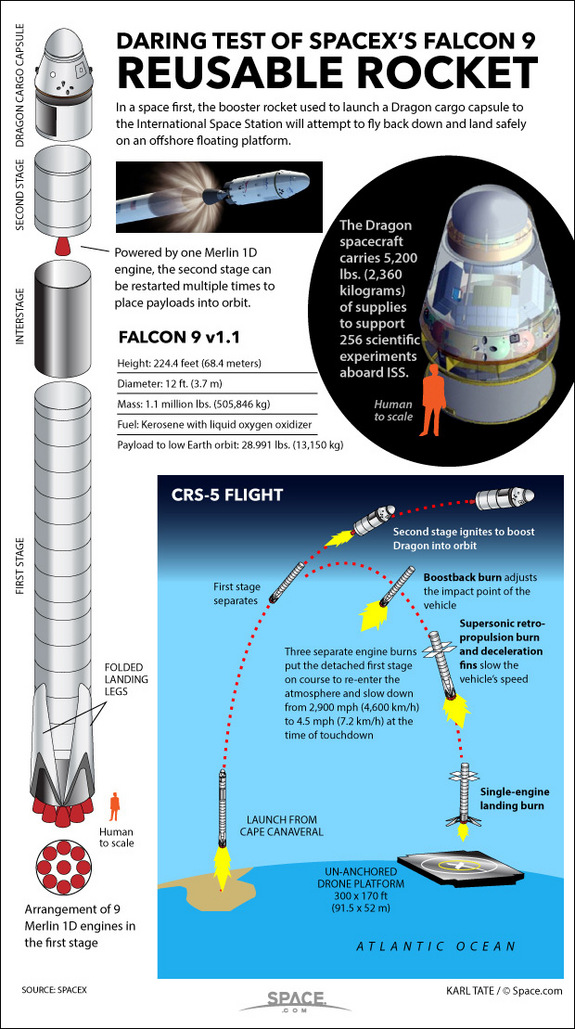
I’M A FAN OF SPACEX

VICTOR - SHOT BY MICK - ENHANCED

NASA AND ITS SUPPLIERS HAD BECOME COMPLACENT. IT HAS BEEN CLEAR FOR YEARS THAT THERE HAD TO BE BETTER WAYS—AND SPACEX SEEMS TO BE FINDING THEM

THEY NEARLY MADE IT THIS TIME—SOON THEY WILL SUCCEED. REMARKABLE!

I have written about the distractions of things society thinks you ought to do before (the devil in disguise) to stop you writing, but my weakness has always been either impossible or crazy projects (as I tend to think of them).

The impossible would include trying to change the Irish economy in the Eighties (we succeeded after many years and at great personal cost) and opposing the U.S.’s orientation towards wheeled armored vehicles in the 2000s.

Apart from writing, economics and military matters are my two main intellectual areas of interest.

Where the latter is concerned—again I paid a heavy cost personally—and this time appeared to fail. However, recent evidence suggests otherwise (something I’ll write about some other time). The game was worth the candle.

In my experience, success rarely comes predictably. Just when you think a cause is hopeless, you have a breakthrough. The fates like to tease (and torture). Fortunately, I tend to take the long view. I’m not really  a masochist but I’m a reader—and extensive reading has given me a perspective other than expecting instant satisfaction or easy success. In effect, I have been thoroughly converted to the principle than anything worth doing takes a very very great deal of time and effort—with the chances of failure being high. It’s a good principle to believe in if you are a writer.

My crazy project of the 90s—a spinoff from my writing—resulted from researching the supergun which lead to an invitation to Lawrence Livermore to watch their supergun being fired—and then to try and help two of the scientists involved try and raise the necessary money to build a hydrogen powered supergun to fire supplies into space. Stuff can withstand the pressures involved when it is fired from a gun at hypersonic speeds. People tend to come to a sticky end (literally).

We didn’t succeed in this case—although the idea is very far from dead—but it was, and remains, a fascinating project and made me keenly interested in the various efforts to try to find a way of accessing space at lower cost. The traditional figure quoted to transport a pound of anything into space is $10,000 (and it can be a great deal higher). That, as my friend Dr. John Hunter, likes to say, “Is non trivial.” John was the original proponent of the Livermore supergun. You can Google him.

SpaceX seem to be doing just that—achieving lower costs—so I’m an enthusiastic supporter. I’m also a fan of Elon Musk who has a rare talent for succeeding with the impossible.

He is my kind of entrepreneur.

What is my current crazy project? Well I have two—and fortunately both relate directly to my writing. On involves military thinking—and the other relates to movies.

Actually, I have three crazy projects now I think of it. The third relates to the opposite sex.

You know what they say about such things. If I tell you (any more) I’ll have to kill you.

Relax! I would never harm any of my readers. I need every one I can get.

VOR words 481.


Saturday, January 10, 2015

(#101-1) January 10 2015. A tragic business—but happier memories.

THINKING ABOUT FRANCE

VICTOR - SHOT BY MICK - ENHANCED

FOR OBVIOUS TRAGIC REASONS

RANDOM PLEASANTER MEMORIES

As I have mentioned before many times, one side of the family, Benjamin Lentaigne de Logivieres,  came from France, from Normandy, because the locals had decided to cut his head off.

It’s as good a reason to emigrate as I can think of. He hadn’t done anything (as far as I know) but he was an aristocrat (his father was a count), the French Revolution was on, and decapitation was all the rage.

I can’t resist this. Think of it as the cutting edge of democracy. 

He wasn’t madly keen on the idea so made love to the jailer’s daughter—and she helped him escape. Supposedly she lowered him in a laundry basket into the river, and he drifted to a ship which was going to Ireland.

Is a waterproof laundry-basket credible? Wicker seem more appropriate. Maybe he was only lowered in the basket, and swam thereafter.

Lucky for me that he did—or I wouldn’t be. His sibling were not so lucky. It’s disconcerting to look up your ancestors and see Guillotined beside one after the other.

Be what?

Exist.

I love France so have been there often. Strangely enough, I’m not madly keen on Paris—though I once had an affair with a countess there (sadly, she is now dead). She took me to a very expensive restaurant and sitting at the next table was the then Mexican president (and party). If memory serves it was Carlos Salinas de Gortari. He started flirting with her but lost out. He is the only president I have ever had as a rival.

I’m rather glad it wasn’t Clinton. I might have been in trouble.

Le Monde paid the bill. Catherine worked for them at the time. Le Monde—as of course you know—is a rather classy French newspaper.

I was robbed in Paris on another occasion and recall sitting in the police station watching policemen coming off duty and racking their submachine guns one after the other. Irish cops normally aren’t even armed so that got my attention.

French cops armed with automatic weapons actually goes back to the aftermath of WW II when there were so many weapons around there was a serious violent crime wave. Then came came the French-Algerian War and its aftermath—and numerous plots to kill President de Gaulle.

In short, Paris has seen a lot of action.

We used to vacation in Monaco—which, of course, isn’t in France. However our hotel was by a few feet.

Thinking of France, and then Monaco—and then jogged by the blog I wrote about my brief film career yesterday, I tried to recall the name of a French movie star I had met there. The name had eluded me for years but today I had Wikipedia to hand. Yes, it was, indeed, Michele Morgan.

I have long had thoughts of retiring to France. I rather fancy dying by slumping forward onto my empty wine glass after a hard day’s writing. The location would a local bistro—and the wine bottle would empty too.

Would I be alone? That would be telling.

VOR words 511.


Friday, January 9, 2015

(#100-1) January 9 2015 My life in the movies!

YES, I WAS REALLY IN A MOVIE WITH HIM

VICTOR - SHOT BY MICK - ENHANCED

ROD TAYLOR HAS JUST DIED

ACTUALLY, I’M WRONG—IT WAS STUART WHITMAN (See photo below of him in THE LONGEST DAY)

I’ve had a confusing life in some ways (though an interesting and adventurous one—for which I have been forever grateful).

Since I have experienced a great deal of confusion of one sort or other over the years, I had better make clear that in this case I am referring to being sent to boarding school at 5 (which is ridiculous) and going to university at 16 (which is nearly as ridiculous) in 1961.

Back in those days, Many British came to my university, Trinity College, Dublin, Ireland, but they had done two years compulsory military service first. That meant they arrived aged 20 or 21 That meant in their final year—the degree courses were mostly four years—they were 24 or 25. Hard to compete for the very limited stock of women who went to university then with such an age handicap.

Still, when I look back, I can’t really complain. 

Anyway, my allowance was minimal so I had to work my way through university and in 1961 decided I would try being a movie extra. Money apart, it was a matter of geography and family connections. My sister and girlfriend were both actresses, an uncle and aunt were successful actors—and so on. We were saturated in both the theater and the movie business-and we lived near to Ardmore Studios in Ireland.

MARIA SCHELL—EVEN SHE COULDN’T PERSUADE ME TO STAY IN THE MOVIES!

My first movie was THE MARK starring Stuart Whitman (see above) and Maria Schell (see above). I went on to be in a few more movies, notably RHAPSODY IN BLUE with Ray Charles (whom I helped to mob in one scene—I had to tear his sleeve off which strikes me as a rather weird way of appreciating his music) but eventually decided that there were few more boring ways to pass the day than  hanging around a movie set. As for meeting movie stars, we had plenty visiting our house so I had become quite blasé.

I shall return to a movie set again only if, and when, one of my books is made into a movie. I had virtually ruled out the possibility, but—strangely enough—it now looks as if it could happen.

But, I positively refuse to be an extra

VOR words 386.


Thursday, January 8, 2015

(#99-1) January 8 2015. Munch! Munch! Munch!Software is still eating the world. When will it start writing books? It already has.

SOFTWARE MAY BE EATING THE WORLD

VICTOR - SHOT BY MICK - ENHANCED

BUT WE BLOGGERS ARE DOING A LOT OF MUNCHING TOO.

  • WORDPRESS. 100,000 new blogs are created daily
  • WORDPRESS. It already has 65 million
  • TUMBLR has 102 million
  • LIVEJOURNAL has 63 million
  • WEEBLY has 12 million

You would think all that competition would depress me. It actually doesn't. It might if I was trying to make a living off the blog, as such, but I’m not. What I am trying to do is communicate with my readers and whoever else happens to be interested. And, to my great surprise, I enjoy blogging. I love it. Why not, indeed. It is writing—and what sane person, once he (or she) learned how enjoyable writing is—would want to do anything else.

I’m quite surprised that only 100,000 Wordpress blogs are created daily. After all, there are roughly 320 million of us in the U.S. alone—though I guess babies don’t blog—yet.

There will probably be an App for that soon..

VOR words 158.


Wednesday, January 7, 2015

(#98-1) January 7 2015 What happens to a country when it gets financialized? Quite a lot—and none of it is good—and, particularly, when it get financialized to excess. Right now, that is the U.S. situation. Just look at the figures.

AN IDLE QUESTION

VICTOR - SHOT BY MICK - ENHANCED

IS THE ECONOMIC SYSTEM WE HAVE WORKING FOR US? OR MAYBE JUST GETTING US DEEPER AND DEEPER INTO DEBT? OR IS THAT A SILLY QUESTION?

US debt dec 31 2014_0

THIS IS THE NATIONAL DEBT FROM 2007 TO 2014

IT TOTALS $18 TRILLION—AND CHANGE

When Obama took office on Jan. 20, 2009, the debt was $10,626,877,048,913.08. Since then, it has increased $7,514,567,086,650.22--which is $65,443 per household, $70,985 per full-time worker and $84,266 per full-time private-sector worker.

He can scarcely be blamed for that increase. He inherited an economy is financial free-fall—The Great Recession. It took a great deal of money to avoid complete disaster. Unfortunately, most of went to the people who had caused the crisis in the first place.

The way matters are structured at present, if the major financial institutions get into trouble—as they do regularly—the government has to bail them out (or the economy collapses). It’s a blackmail situation.

Could we do something about it? Dodd-Frank was an attempt but it has already been weakened—and the Republicans want to weaken it further. They side with the banks.

total credit market debt

THIS IS TOTAL CREDIT MARKET DEBT

THE TOTAL IS $58 TRILLION

There are three things about debt that are worth bearing in mind.

  • You have to pay it back.
  • You have to pay interest.
  • The higher the debt, the higher the interest.

The more we turn into a debt based economy, the more we pay in interest, the less we have to spend on anything else—no matter how important or worthy. In effect, debt amounts to a sort of tax which we pay to those who lend us the money—the ultra rich (who get richer).

As far as most of us are concerned, we are on a very slippery slope.

The following is from a story by Les Leopold in Alternet.com dated December 31 2014. It is well worth reading the whole thing.

We are certainly beholden to Wall Street. By 2006, 40% of all US corporate profits went to Wall Street —up from 7% in 1980. And over $21 trillion is now hidden in offshore tax havens– and moves there via Wall Street. Furthermore, the top three banks dominate the entire financial system. These oligopolists have made it clear to all, they are far, far too big to fail, jail or curtail.


rent vs income


5min_Rising_123014

young-living-at-home

We clearly need a financial system, but right now, the tail is wagging the dog. Given that we have just endured a truly horrendous financial crisis, the 2008 Great Recession, which was caused by Financialization, one has to wonder why we are setting ourselves sup for a follow-on.

Why is this being allowed to happen? Because those who own our financial institutions also control the political process. The system is rigged. First, it was bought. Politicians come cheap in relation to the payback. In fact the return on investment from bribing a politician is spectacular.

That’s why the movers and shakers do it.

One dollar, one vote. It’s a truly sad state of affairs. All my research indicates that financialization at the U.S. level is a drag on the economy and inherently unstable.

We are heading towards another (entirely preventable) financial crisis.

When—sooner than you’d think.

VOR words c.430