THANKSGIVING THOUGHTS

ON WRITING ABOUT SEX
Sexuality is not mere instinctuality; it is an indisputably creative power that is not only the basic cause of our individual lives, but a very serious factor in our psychic life as well.
Carl Jung
Sex is a part of nature. I go along with nature.
Marilyn Monroe
“Many lovers are ‘off to the races:’ Hurtling towards orgasm, they miss the excitement of sensual meanderings along the way.”
Alexandra Katehakis, Mirror of Intimacy: Daily Reflections on Emotional and Erotic Intelligence
“In my next life I want to live backwards. Start out dead and finish off as an orgasm.”
Woody Allen
“He slides himself inside her, her heart is bursting. The pithy organic organ can't hold all that she feels for this man. When she reaches her peak, her brain supernovas, a small, perfect death.”
MrsAlenko
“As if reading her mind, he leaned into her again, pupils dark, irises glowing like a forest caught in the last rays of sun before dusk… “Do you want me to make you come?”
“Is that a trick question?”
Dianna Hardy, Cry Of The Wolf
Anyone who knows anything of history knows that great social changes are impossible without feminine upheaval. Social progress can be measured exactly by the social position of the fair sex, the ugly ones included.
Karl Marx
It's so long since I've had sex I've forgotten who ties up who.
Joan Rivers

Sex is as normal as breathing—and rather more enjoyable—so I’m somewhat puzzled at why we treat it the way we do. I find it hard to define that as precisely as I would like—it is a subject worth examining in more detail some other time—but it is a cross between demonization and distaste as far much of our culture is concerned (despite considerable progress towards tolerance and openness).
Niches apart (Comopolitan, for instance) what we don’t do is either talk about it openly, or write about it, with honesty. That is not considered to be in good taste. Sexual candor is not regarded to be a good thing except in the context of pornography. Accordingly, publicly we treat it much of the time as if it was dirty—something to be ashamed of. In a word, we are hypocrites. There are numerous exceptions to this, but overall, this is the current situation.
Paradoxically, it is my impression that sex plays an even greater role in our lives than we are generally prepared to admit. From puberty onwards, until you are pretty much dead, sexual thoughts and desires dictate a great deal of our behavior. Arguably we talk more about money and material things in general, but I suspect we think more about sex—and may even be more motivated by it. That may sound a surprising statement, but reflect that sex underpins the vast majority of human relationships.
When I used the expression, “pretty much dead,” I was harking back to a woman I helped to nurse when she was dying of cancer several years ago. No, I’m not a nurse, but she needed help. I didn’t even know her that well, but she was a friend of a friend.
Although she was bent and crippled by a particularly aggressive cancer, and physically incapable of sex because she was in so much pain, she got a kick out my seeing her substantially naked (as was sometimes required), told everyone I was her lover (entirely untrue) and said to me as she was dying how sorry she was she hadn’t got me into bed. These were not the last words I expected, let me tell you. She spoke them after she had drunk the lethal dose. She killed herself under Washington State’s Death with Dignity Act on December 22 2010. Sex was on her mind to the very end. She was quite a woman.
It is not so much that we are obsessed with sex. It is more that we are sexual animals, heavily influenced by our sexual wants and needs, so such focus is no more than natural—and, indeed, healthy. It is our dishonesty about it which is unhealthy.
The best window into our sexual reality today is the internet. The sheer scale of sexually oriented websites is hard to grasp—but it is is absolutely vast, and spans the gamut from outright porn, to sexually specific dating sites, to the downright respectable (which come as something of a shock given that hedonism dominates).
Where books are concerned, whether you should put sex in, or not, depends upon the book. Clearly if it’s a math book, a long description of the pleasure of 69 might be unnecessary—even though it might cause increased interest in STEM.
But, I don’t know much about text books (except that they are over-priced) so let me move on to thrillers where I have a certain knowledge and expertise.
The convention, where thrillers are concerned, is to put in a little sex—a few ‘dirty bits’—but not too much—and not to get too graphic. So, for instance, if you want to describe a man going down on a woman (I have a problem spelling words like ‘cunnilingus), you refrain from the fine detail. You don’t described the pleasures of a woman’s sweaty public hair against your character’s cheeks, and how their mutual pleasure is enhanced when he slides his finger into her sphincter. That would, generally speaking, be considered going too far. Yet, that is on the milder side of what people actually do—so I’m far from sure I understand why we shy away from describing the reality.
Incidentally, why do women shave their public hair? I think it’s incredibly sexy. It’s rather fun to be lost in the forest. It adds texture to the plot, so to speak—and touch is fundamental to sex.
I didn’t fight these restrictions much in the past because I was normally more concerned about other editorial issues. Moreover, my first publisher, Grove Press, asked me to put more sex in rather than take it out. My editor, Rosemarie Morse, phoned me to say she had just had lunch with a girl friend who said she really liked reading a good sex scene early in a book—and could I oblige. Well, apart from the fact that Rosemarie was (and still is) both attractive and delightful, being a gentleman, of course I did. Grove was a small publishing house with a commendable reputation for flying in face of convention, and, as such was atypical.
My relationship with my second publisher—a large traditional house—was very different to the point of being downright hostile, and my freedom to write as I wanted was curtailed.
Now the dead weight of traditional publishers can be bypassed, I have been giving considerable thought to how I want to write about sex in the future.
It can actually be quite a struggle to write a sexually explicit scene. I find it difficult to write as freely as my intellect says I should for a variety of reasons—from our cultural taboos to good old-fashioned embarrassment. It is hard to go against cultural norms—even if you think they are wrong. Fortunately, I don’t worry at all about what my readers think. Out of over 7,000 fan e-mails, none complained that my sex scenes were too graphic—and they are by conventional thriller standards--and a significant percentage of my readers are women.
I endeavor to overcome my inhibitions because I think sex is integral to the human condition, it can work to enhance the story in a variety of ways, and that we could—and should—get to understand and appreciate it a great deal better than we do.
Instead we have a society which can’t even make its mind up about sex education—but where sexual innuendo permeates just about every facet of commercial life. We seem to be better at making money out of it than incorporating it naturally into our culture.
Here, let me make it clear that when I talk about incorporating more sex into my writing, I don’t just mean physical sex, but the entire span of emotions, feelings, fears, joys, desires, and sensibilities that accompany it. I tend towards the view that even where a relationship is almost entirely physical, there has to be some emotional involvement as well—albeit inadequate or otherwise conflicted (but maybe I’m being naïve).
I seem to have a romantic streak which works to inhibit my understanding of just how cold-blooded and uncaring some people can be. I like to think that people connect at some level under almost all circumstances. I also harbor the suspicion that I may be dead wrong on that point.
My general thought is that, as always, the first priority has to be the story—because anything that doesn’t serve the story should not be included—but that, subject to that critical condition (which should be tattooed inside every writer’s eyelids), I should write about sex, and its related feelings, in as much graphic and specific detail as I write about anything else.
For instance, I fail to see why it should be considered more acceptable to describe violence in all its bloody detail—down to the gory effects of explosive rounds on the human body, yet not go to the same kinds of lengths where sex is concerned—whether that sex be straight or gay.
Whether I have the courage to implement my convictions is another matter. Remnants of the culture and standards I grew up with all those decades ago still linger. Though my mother collected men like Hemingway hunted big game—with trophies to match (mostly children instead of mounted heads)—the general culture in the Ireland of the time was that sex hadn’t yet been invented. Immaculate conceptions were all the rage—or maybe babes were flown in by storks.
When I was small I never believed in the stork story. I had been told we don’t have them in Ireland except in the zoo. However, I thought the ‘babies are found under cabbages’ might be a runner. Certainly, we grew a lot of cabbages.
In Ireland, in those days, condoms and all other kind of birth control were illegal; oral sex had the same status as America before Columbus came along; and any books which described sex in any detail at all were banned (which included books by some of Ireland’s most highly esteemed literary figures). Funnily enough, the father of one of the first girls I dated was a judge—and a member of the censorship board—and I noted, with interest, that he kept the books he and his board banned.
Meanwhile, at boarding school, Catholic guilt was being hammered into me together with the fact that the primary trigger of that powerful force was sex in any form or shape—unless within wedlock, and performed solely for the purposes of procreation.

Masturbation (the focus of PORTNOY’S COMPLAINT) was regarded as perverse and sinful—and the possibility of a woman masturbating was never even hinted at. In fact, the idea that women were innately sexual wasn’t even considered. The general concept was that women had to be coaxed into doing something that most regarded as distasteful—but their duty (every full moon or so).
Given my mother’s behavior, I found this viewpoint questionable, but since the consensus was that she was unusual—to put it mildly—I still sort of went with the flow for a time. On the other hand, we had maidservants—single women with needs—and no TV, so after I hit puberty I was soon to discover that my mother was far from being an outlier (merely more zealous and better resourced).
You know there are times I wonder whether education doesn’t do more harm than good. Yes, I know one needs it—and I’ve certainly benefited from it—but I was taught so much that has turned out to be either untrue, or distorted, as well, that it has taken me years to sort it all out. As for organized religion, it really does have a great deal to answer for. It is quite clear that we all have a spiritual dimension—which few of us seem to know how to harness adequately—but which seems to be peculiarly vulnerable to manipulation by charlatans.
I guess we all want to know the meaning of life—and organized religion capitalizes on this universal desire by providing instant answers (supported by no facts at all). It is, so to speak, Fast Food, for the mind—and about as healthy. To avail of it, all you have to do is shut down your ability to think logically and rationally—and substitute faith (belief not based on proof). That seem to me to be a Faustian bargain if ever there was one.
Free will—reportedly a God-given gift—has to be based upon rational thought otherwise it is not free will.
Since I have known many fine pastors and other men of the cloth who were, and are, members of organized religions, I dislike saying that—but just look at the track record. Throughout history, everywhere organized religion has been ascendant, it has been associated with intolerance, meanness, cruelty, oppression, greed, bigotry, corruption, repression, ignorance, and torture, death and suffering on a massive scale—and, primarily, has been utilized by the powerful as a highly effective tool of social control. What is more, this holds true—in most cases—regardless of the religion.
Christianity's record in this regard is dreadful—and Islam is no better. Only Buddhism emerges with some honor.
The overall point I’m making is that although I try to keep an open mind—and fight hard to be a free thinker—I’m also aware that social pressures and other conditioning over the decades (even where I know it is wrong) has an effect. So I don’t quite know whether I will be able to write quite as candidly about sex as I would like—but I’m going to try. It just feels like the right thing to do. If writing is about illuminating the human condition, then I think sex could do with more light shed on it.
Porn apart—does anyone write candidly about sex at present? Well, there are way too many books out there for me to comment accurately about that, but I’m sure some indie authors do. There is a whole area of erotic romance out here about which I know little (somehow I don’t think the word ‘erotic’ is there by accident). Where traditional publishers are concerned, I doubt it. If I’m doing them an injustice, let me apologize in advance—but, proof first, please.
If I was destined for hell—and could feel the heat of the flames—and a traditional publisher offered me a way out, I suspect I would hesitate. The integrity of traditional publishing is about on a par with Congress.
Maybe I’m being somewhat unfair to Congress.
When it comes to learning about how to write about sex, let me start by repeating the advice I give about learning to write about anything.
Start by reading the masters—and anything else you can find that is remotely relevant. But, read, read, read.
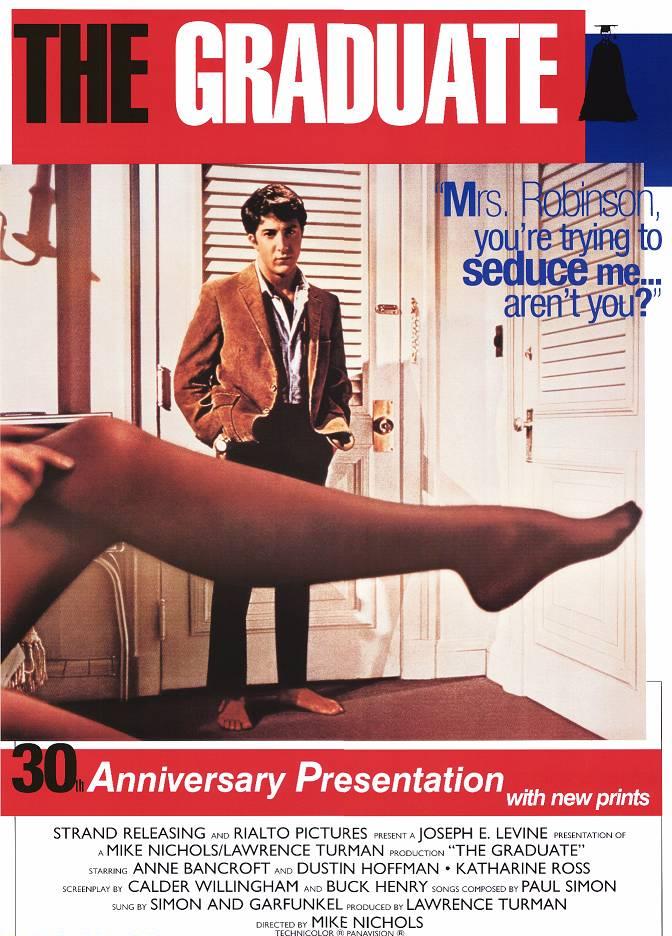
The Gold Standard where sex combined with literature is concerned used to be LADY’S CHATTERLY’S LOVER by D.H Lawrence (a truly excellent writer, by the way) but COUPLES by John Updike could well be a rival. Then, let me recommend my personal favorite, IN PRAISE OF OLDER WOMEN by Stephen Vizinczey—largely, I suspect, because it reflects many of my own experiences. And the, of course, there is THE GRADUATE by Charles Webb and PORTNOY’S COMPLAINT by Philip Roth. Another writer who comes to mind, who is sexually more graphic than most is Ken Follett. He uses sex to great effect in his works—and has sold 130 million books.

If memory serves, LIE DOWN WITH LIONS incorporates a particular steamy scene involving mutual masturbation.
So what am I forgetting? What else but FIFTY SHADES OF GREY by E L James—which my #1 fan, Deb Waggoner, told me I should read. Deb is a woman of impeccable judgment, so I intend to follow her advice.
A quick aside—though it has been more than 20 years since she first wrote to me, and we have talked quite a few times by phone—we have never met. I find it hard to over-stress how invaluable her support, and those of my other fans, has been,
The three volumes have sold over 100 million copies—which is a such a staggeringly large number by conventional standards—that it is fairly safe to assume that it has tapped into a nerve.
What is about? According to Wikipedia:
Fifty Shades of Grey is a 2011 erotic romance novel by British author E. L. James. It is the first installment in the Fifty Shades trilogy that traces the deepening relationship between a college graduate, Anastasia Steele, and a young business magnate, Christian Grey. It is notable for its explicitly erotic scenes featuring elements of sexual practices involving bondage/discipline, dominance/submission, and sadism/masochism (BDSM). Originally self-published as an ebook and a print-on-demand,[1][2] publishing rights were acquired by Vintage Books in March 2012.[3][4]
The second and third volumes, Fifty Shades Darker and Fifty Shades Freed, were published in 2012. Fifty Shades of Grey has topped best-seller lists around the world, including those of the United Kingdom and the United States.[5][6]The series has sold over 100 million copies worldwide and been translated into 52 languages,[7] and set the record as the fastest-selling paperback of all time.[8] Critical reception of the book, however, has been mixed, with the quality of its prose generally seen as poor. Universal Pictures and Focus Features plan a film adaptation scheduled for a February 13, 2015 release.[9]
What does this suggest? It indicates to me—amongst other things-- that female sexuality has long been seriously underestimated.

In my opinion, some of the best writing about sex is on the internet by women writing about their own needs and desires. This tends to leave absolutely nothing to the imagination—especially when it is frequently accompanied by a picture of the author in some sexually explicit position—with masturbation being high on the lost.
Either women’s sexual nature has changed a lot since my youth—or I was fed a great deal of hogwash about the fair sex at the time. Either way, at the rate things are going, we males are going to be also-rans when it comes to masturbation. Indeed, at this rate, given that an ever increasing number of women seem to be describing themselves as bi-sexual—and that sex toys are getting better and better—we males may end up being surplus to requirements. I hope that unhappy fate happen after I have made my departure.
Who writes this stuff? Women of all backgrounds and persuasions—though judging by appearances, they tend towards the more affluent (they are certainly not the kind of women who you might expect would be doing this). In short, these are not the outpourings of some sexually deviant fringe, but the thoughts of a wide range of completely normal women taking advantage of the relative anonymity of the internet. Who knew such women would advance their sexuality in such a blatant way—but so many seem to be doing it, that before too long, it will probably be mainstream
There is a raw honesty about all this which is really quite touching—and which suggests that we men aren’t doing a particularly good job at keeping our women satisfied.
Perhaps this is not surprising—because we come back to the fact that sex is not discussed in the specific way it needs to be. As a consequence, ignorance abounds—particularly amongst men. We tend to be a one shot deal in bed—targeting orgasm with male efficiency—whereas women have more complex needs.
Actually, so do men, in my opinion.
Reading apart, I can’t help but conclude that if you are going to write convincingly about sex, you should have experience of the real thing—and preferably a great deal of it. However, here I find myself up against a fundamental problem. I certainly have enough experience to write about sex from a man’s point of view—and I have in a number of books—but I am far from convinced that I understand women’s sexuality adequately—even after considerable field work (for want of a better phrase). It’s just not something that someone with my background tended to discuss in the kind of explicit intimate details that I now feel is required. Here, I am less concerned about the physical aspect—though I’m sure I have much to learn there too--than about the emotional.
We’re back to something that strikes me with ever more force the more I think about it—the extraordinary fact that no one (no matter how intimate) ever really knows what another person is thinking. You know what they say and what they do—and you can read their body language—but there it stops.
As a writer, I find that somewhat frustrating because, when it comes to sex, I would really, madly, and deeply like to be able to describe matters accurately from a woman’s perspective.
It is my impression that the internet has brought something of a revolution to women’s sexuality—a revolution which is still a work in progress, and which is likely to have profound consequences
It is empowering women sexually. It has provided a forum for women to write explicitly about their needs; it has made erotic communication much easier; it has made it easier to have de facto affairs via cybersex on a virtually risk free basis; and hook-up sites have made the arranging of real sex relatively straightforward. In fact, I think there are even some Apps which make the whole process even easier.
In addition, electronic communication has enabled vastly more women to share their thoughts with relative ease –and has undoubtedly fostered a new normal where a woman’s desires are concerned. Examples of this can be seen in profusion on the internet, but perhaps the most explicit example concerns an organization called One Taste
One Taste advocates ‘orgasmic meditation.’ Here is Wikipedia on the subject.
In press accounts, orgasmic meditation has been compared to tantric practices. "The idea, similar to Buddhist Tantric sex, is to extend the sensory peak."[1] Daedone (the founder) has stated in interviews that OMing also borrows from other traditions including yoga, and other forms of meditation,[7] and she describes it as a central element of what she terms the "Slow Sex Movement".[4][8]
She states that OMing brings consciousness to sexuality in the same way that sitting meditation brings consciousness to stillness and yoga brings consciousness to movement.[7] Proponents maintain that the practice leads to more intense and profound orgasms,[5] expands one's capacity to feel pleasure and other sensations, and promotes greater personal awareness and interpersonal connectivity.[1] Others describe more limited effects, such as simply "getting in touch with one's body."[9] Some who have participated in or witnessed the practice report feeling a sense of discomfort or inappropriateness. "I tried with great futility to make the connection between an austere Zen monastery filled with silent monks meditating on emptiness, and what I had just seen."[10]
The practice of orgasmic meditation is done with a partner. One person lies down, unclothed from the waist down, while her partner sits alongside. The one sitting uses his or her index finger to slowly, deliberately stroke the clitoris and genitals of the other. Typically this safe sex practice involves the wearing of gloves.
The session lasts for 15 minutes and is timed precisely. Both partners focus their attention on the point of contact or stroke, simply feeling the sensation that is present.[11] If the mind drifts, attention is brought back to the point of contact and immediate sensations. Practitioners of orgasmic meditation maintain that the practice nourishes the limbic system, the part of the brain shared with other mammals and associated with emotion, empathy, and motivation.[4] When the OMing session is over, both partners share their experiences verbally.[1][6]
OMing requires a partner, and so is distinct from masturbation, for two reasons. First, the voluntary mind must be given a rest, surrendering to the experience rather than seeking to produce the desired sensations. Secondly, the resonance between two partners is essential to the experience of shared sensation.[12] OM is usually practiced separately from sex and often in a location other than the bedroom; as distinct from foreplay, Daedone describes it as a practice "designed to keep a woman on a plateau of sensation." A visiting UK columnist surmised that "OM is a form of recalibration that prepares the body for better, more intense sex."[13]
Just in case the significance of the above hasn’t hit home—and it really needs to—let me introduce you to www.ashleymadison.com —a site set up specifically to promote affairs. It proudly boasts that a new woman joins ashleymadison—to have a discreet affair—every sixty seconds. That works out at over half a million a year—and that is just one site out of an endless number. Men have let women down—and there are consequences.
Do I think all this is a good thing? Well, it is scarcely going to make relationships more secure—given the virtual availability of infidelity on demand—but, overall, I think it is a very good thing.
To be frank, I don’t believe that even now—despite considerable progress—that women are treated properly in our society. They are paid less (77 cents to a male dollar); are under-represented in politics and in business management; work harder; and get more of a a raw deal in the bedroom than they deserve (though they seem to be increasingly able to remedy that particular deficiency without male help).
Given all that, I believe women deserve all the empowerment that they can get—and if we writers can help a little, then I think we should.
Besides, if women are happier, it is absolutely certain that we males will be too. More than we deserve perhaps?
Women are kind of special (though I can think of a few exceptions). Such is the human condition.
Interesting how often Buddhism comes up—invariably in a favorable context. And I could say much the same about Tantric Sex.
VOR words 4,040
Every now and then I seem to be compelled towards the longer form—and this is one such result. I actually wrote it some months ago—but misfiled it. It turned up today—so here it is.


